In late January, the United States withdrew once again from the Paris Agreement, while the Environmental Protection Agency (EPA) revoked its 2009 Endangerment Finding—moves that highlight how climate policy reversals in major economies can destabilise global efforts and pose serious risks for developing countries, particularly India.
A Better Tomorrow
Stories, Practices, and Solutions
Read how the results of community-led watershed development remain evident even after 25 years in the rain-shadow area of Maharashtra.
Drawing from work with smallholder farmers—from Kumbharwadi in Maharashtra to Madaul in Odisha—WOTR has contributed key experiences, insights, and evidence to the Stories of Resilience 2025, a publication launched by the Global Centre on Adaptation (GCA) at the United Nations Climate Change Conference in Belém, Brazil.
At this year’s IUCN World Conservation Congress in Abu Dhabi, a new global report was released that carries an important message for our planet: to restore the land, we must first reconnect it.
Through the India Climate Collaborative’s grant to WOTR, the two organisations set out with a shared ambition: to support the Government of Maharashtra in strengthening its climate adaptation planning and delivery.
As the heat in India increases, the rising temperature is also affecting the food security of the country. India is focusing on climate-resilient agriculture by developing climate-resilient crop varieties, designed to cope with unpredictable weather and boost farm productivity.
Within a small place, Singaram Budhundu from Telangana and his family members manage a small kitchen garden which provides his family with a steady stream of fruits and vegetables, adds to their nutrition and also boosts the family income
Imagine a barren patch of land, lifeless, without hope, dismissed as worthless. Now imagine transforming not one, not two, but 90 such spaces into green, thriving hubs of life, prosperity, and sustainability. This is not a distant dream; it’s a mission. A mission to fuse the power of nature, technology, and human will
The complexity of the challenges faced by semi-arid farming systems in India necessitates a holistic understanding of climate resilience, one that integrates both climate and development concerns.
India is also home to a multitude of Indigenous Peoples and Local Communities (IPLCs), each with unique ethical, cultural, and traditional practices. For centuries, these communities have harnessed their Traditional Ecological Knowledge (TEK) to sustain their livelihoods and preserve their cultural identities.
In late January, the United States withdrew once again from the Paris Agreement, while the Environmental Protection Agency (EPA) revoked its 2009 Endangerment Finding—moves that highlight how climate policy reversals in major economies can destabilise global efforts and pose serious risks for developing countries, particularly India.
Read how the results of community-led watershed development remain evident even after 25 years in the rain-shadow area of Maharashtra.
Drawing from work with smallholder farmers—from Kumbharwadi in Maharashtra to Madaul in Odisha—WOTR has contributed key experiences, insights, and evidence to the Stories of Resilience 2025, a publication launched by the Global Centre on Adaptation (GCA) at the United Nations Climate Change Conference in Belém, Brazil.
At this year’s IUCN World Conservation Congress in Abu Dhabi, a new global report was released that carries an important message for our planet: to restore the land, we must first reconnect it.
Through the India Climate Collaborative’s grant to WOTR, the two organisations set out with a shared ambition: to support the Government of Maharashtra in strengthening its climate adaptation planning and delivery.
As the heat in India increases, the rising temperature is also affecting the food security of the country. India is focusing on climate-resilient agriculture by developing climate-resilient crop varieties, designed to cope with unpredictable weather and boost farm productivity.
Within a small place, Singaram Budhundu from Telangana and his family members manage a small kitchen garden which provides his family with a steady stream of fruits and vegetables, adds to their nutrition and also boosts the family income
Imagine a barren patch of land, lifeless, without hope, dismissed as worthless. Now imagine transforming not one, not two, but 90 such spaces into green, thriving hubs of life, prosperity, and sustainability. This is not a distant dream; it’s a mission. A mission to fuse the power of nature, technology, and human will
The complexity of the challenges faced by semi-arid farming systems in India necessitates a holistic understanding of climate resilience, one that integrates both climate and development concerns.
India is also home to a multitude of Indigenous Peoples and Local Communities (IPLCs), each with unique ethical, cultural, and traditional practices. For centuries, these communities have harnessed their Traditional Ecological Knowledge (TEK) to sustain their livelihoods and preserve their cultural identities.
By Categories
By Tags
How planning and implementation of ecosystem-based adaptation (EbA) and agroecology principles in arid or semi-arid regions can help address the growing impacts of climate change.
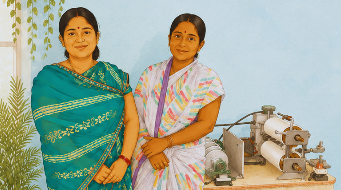
Two mothers in drought-hit Marathwada built a papad enterprise with WOTR and Standard Chartered Bank, paying school fees for their children.
COP17 put a simple question to the world’s drought experts: can lost land be restored? WOTR’s watersheds may hold the answer.
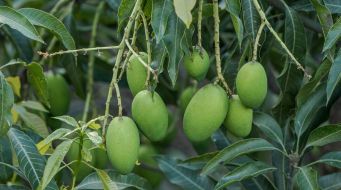
Mango orchards are improving rural livelihoods in Chhattisgarh, creating resilient farms, diverse incomes, and long-term opportunities for farming communities.
Drawing on WOTR’s grassroots experience, this piece explores the powerful connection between water security, ecosystem restoration, agriculture and nutrition security in rural India.
Exploring World Water Week through our interventions in implementing ecohydrology-based Nature-based Solutions in Maharashtra and Telangana
This World Water Week, explore how water access shapes pastoral livelihoods, migration routes and resilience across India’s changing landscapes.