This World Water Week, explore how water access shapes pastoral livelihoods, migration routes and resilience across India’s changing landscapes.
A Better Tomorrow
Stories, Practices, and Solutions
Pastoralism has shaped India’s rangelands for centuries. Here’s why pastoralists are key to protecting biodiversity and healthy ecosystems.
वैज्ञानिक बकरीशेड और WOTR के प्रशिक्षण ने सुमन सिंह की जिंदगी बदल दी। उनके दृढ़ संकल्प ने संघर्ष को आजीविका के एक टिकाऊ ग्रामीण स्रोत में बदल दिया।
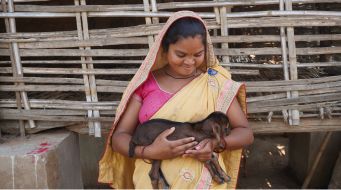
Goat rearing changed Suman Singh’s fortunes with scientific shed design and, WOTR training. Her grit turned struggle into sustainable rural income.
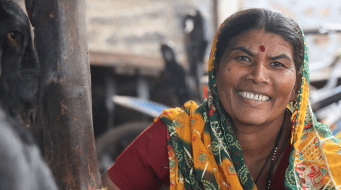
The Rabi Jal Pehal project brought trained Pashusakhis to Agarbatti’s doorstep, offering affordable livestock care and practical guidance.
Exploring village-based systems through Ecosystem-based Adaptation (EbA) offers promising, sustainable solutions for the livestock sector.
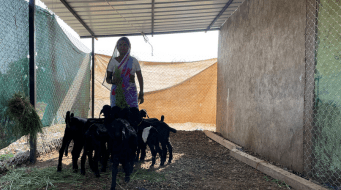
Sunita Jadhav from Bhandar Kumtha village, once struggling with daily wages, found new hope through goat rearing with support from Wells Fargo and WOTR. This venture provided her family financial stability, allowing her to earn a significant income and construct a shed for the goats’ safety.
Babai Sahadev Selhar, aged 52, and her family, long-time traditional goat rearers in Beed, faced mounting challenges in recent years. Residing adjacent to a forest, their livelihood was threatened by persistent wild animal attacks, resulting in a significant loss of income, nearly a third of their total earnings. In response, Selhar was graciously provided with a goatshed by WOTR, facilitated through the Axis Bank Foundation’s ‘Sustainable Livelihood Programme in Maharashtra’.
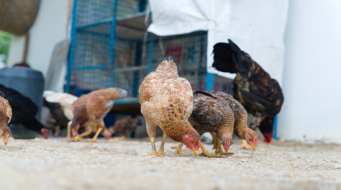
A large majority of the families in Narayanpet, Telangana are either wage labourers or small and marginal farmers who own less than 1Ha. of land. They have meagre incomes, limited access to resources, and no additional skill or financial support available to generate an alternate income. Keeping these factors in mind, the families were given support with backyard poultry farming.
This blog delves into the lives of the Changpa community, a near-invisible pastoral nomadic community in Ladakh and a group largely unknown to mainstream society.
This World Water Week, explore how water access shapes pastoral livelihoods, migration routes and resilience across India’s changing landscapes.
Pastoralism has shaped India’s rangelands for centuries. Here’s why pastoralists are key to protecting biodiversity and healthy ecosystems.
वैज्ञानिक बकरीशेड और WOTR के प्रशिक्षण ने सुमन सिंह की जिंदगी बदल दी। उनके दृढ़ संकल्प ने संघर्ष को आजीविका के एक टिकाऊ ग्रामीण स्रोत में बदल दिया।
Goat rearing changed Suman Singh’s fortunes with scientific shed design and, WOTR training. Her grit turned struggle into sustainable rural income.
The Rabi Jal Pehal project brought trained Pashusakhis to Agarbatti’s doorstep, offering affordable livestock care and practical guidance.
Exploring village-based systems through Ecosystem-based Adaptation (EbA) offers promising, sustainable solutions for the livestock sector.
Sunita Jadhav from Bhandar Kumtha village, once struggling with daily wages, found new hope through goat rearing with support from Wells Fargo and WOTR. This venture provided her family financial stability, allowing her to earn a significant income and construct a shed for the goats’ safety.
Babai Sahadev Selhar, aged 52, and her family, long-time traditional goat rearers in Beed, faced mounting challenges in recent years. Residing adjacent to a forest, their livelihood was threatened by persistent wild animal attacks, resulting in a significant loss of income, nearly a third of their total earnings. In response, Selhar was graciously provided with a goatshed by WOTR, facilitated through the Axis Bank Foundation’s ‘Sustainable Livelihood Programme in Maharashtra’.
A large majority of the families in Narayanpet, Telangana are either wage labourers or small and marginal farmers who own less than 1Ha. of land. They have meagre incomes, limited access to resources, and no additional skill or financial support available to generate an alternate income. Keeping these factors in mind, the families were given support with backyard poultry farming.
This blog delves into the lives of the Changpa community, a near-invisible pastoral nomadic community in Ladakh and a group largely unknown to mainstream society.
By Categories
By Tags
Discover how integrated watershed management in Chhattisgarh is restoring degraded lands, conserving water, improving agricultural productivity and strengthening rural livelihoods.
Project Jal Samruddhi was implemented across 11,840 acres reaching 2,064 households and 10,500+ people in six villages. Read to know more.
Discover how farmers can grow chia, from seed selection and sowing to irrigation, crop care and harvesting.
Project Samruddhi demonstrates how an integrated approach to rural development can strengthen community resilience and create lasting change across 16 villages.
Farming sustained Ramesh’s family of eleven, but limited water kept his land productive for only one season. Drip irrigation changed what was possible.
Shanti’s journey with her daughter Ishvi began with the challenges of malnutrition, and a long road towards better health and nourishment.
Explore key insights from our new book on water governance, women’s leadership and locally relevant climate solutions in Maharashtra
Deep dive into how WOTR’s W-CReS is helping farmers understand the challenges in times of El Niño through localised training.