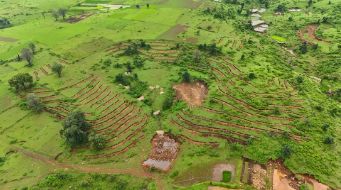
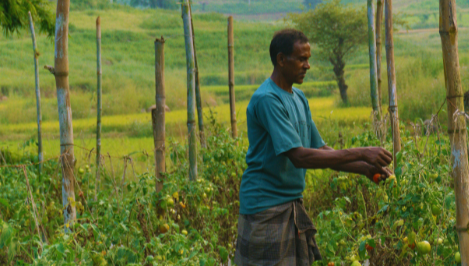
In Rayagada district, crescent bunds help cashew trees retain water on hilly slopes, improving yields. A simple solution strengthening tribal livelihoods and climate resilience.
A Better Tomorrow
Stories, Practices, and Solutions
Making every drop count in Maharashtra’s rainshadow.
How do watershed structures like continuous contour trenches, contour bunds, farm bunds conserve soil and save water?
Since 2019, WOTR and the Rotary Club of Poona have helped Dhamanvan and Shirpunje in Akole, Maharashtra, build resilience through community-driven initiatives.
Integrated Watershed Development (IWD) is a holistic approach to managing land and water resources. It is the process of managing human activities and natural resources on a watershed basis.
Imagine a barren patch of land, lifeless, without hope, dismissed as worthless. Now imagine transforming not one, not two, but 90 such spaces into green, thriving hubs of life, prosperity, and sustainability. This is not a distant dream; it’s a mission. A mission to fuse the power of nature, technology, and human will
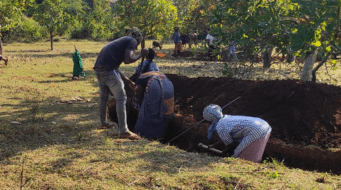
As climate change tightens its grip, the resilient communities in Chhattisgarh need your support more than ever
Community-led watershed development is reshaping rainfed regions, with WOTR empowering communities to secure their water future for over 30 years.
A three-year project by WOTR and HDFC Bank Parivartan aims to uplift 11,700 people in 40 tribal villages of Gadchiroli through sustainable agriculture, water conservation, and livelihood development.
In Rayagada district, crescent bunds help cashew trees retain water on hilly slopes, improving yields. A simple solution strengthening tribal livelihoods and climate resilience.
Making every drop count in Maharashtra’s rainshadow.
How do watershed structures like continuous contour trenches, contour bunds, farm bunds conserve soil and save water?
Since 2019, WOTR and the Rotary Club of Poona have helped Dhamanvan and Shirpunje in Akole, Maharashtra, build resilience through community-driven initiatives.
Integrated Watershed Development (IWD) is a holistic approach to managing land and water resources. It is the process of managing human activities and natural resources on a watershed basis.
Imagine a barren patch of land, lifeless, without hope, dismissed as worthless. Now imagine transforming not one, not two, but 90 such spaces into green, thriving hubs of life, prosperity, and sustainability. This is not a distant dream; it’s a mission. A mission to fuse the power of nature, technology, and human will
As climate change tightens its grip, the resilient communities in Chhattisgarh need your support more than ever
Community-led watershed development is reshaping rainfed regions, with WOTR empowering communities to secure their water future for over 30 years.
A three-year project by WOTR and HDFC Bank Parivartan aims to uplift 11,700 people in 40 tribal villages of Gadchiroli through sustainable agriculture, water conservation, and livelihood development.
By Categories
By Tags
Discover how integrated watershed management in Chhattisgarh is restoring degraded lands, conserving water, improving agricultural productivity and strengthening rural livelihoods.
Project Jal Samruddhi was implemented across 11,840 acres reaching 2,064 households and 10,500+ people in six villages. Read to know more.
Discover how farmers can grow chia, from seed selection and sowing to irrigation, crop care and harvesting.
Project Samruddhi demonstrates how an integrated approach to rural development can strengthen community resilience and create lasting change across 16 villages.
Farming sustained Ramesh’s family of eleven, but limited water kept his land productive for only one season. Drip irrigation changed what was possible.
Shanti’s journey with her daughter Ishvi began with the challenges of malnutrition, and a long road towards better health and nourishment.
Explore key insights from our new book on water governance, women’s leadership and locally relevant climate solutions in Maharashtra
Deep dive into how WOTR’s W-CReS is helping farmers understand the challenges in times of El Niño through localised training.