Agriculture
Agriculture
Why Agriculture
Land degradation and unsustainable agriculture practices have led to a loss of productivity which is fuelling rural poverty. In fact, agriculture productivity in India is amongst the lowest in the world.
And agriculture in the rainfed parts of the country is far less productive than irrigated areas – with crop yields at a third of the national average. While farmers in irrigated areas earn 60 percent of their income from agriculture, farmers in rainfed areas earn only 20-30 per cent from farm-related activities.
Our Interventions
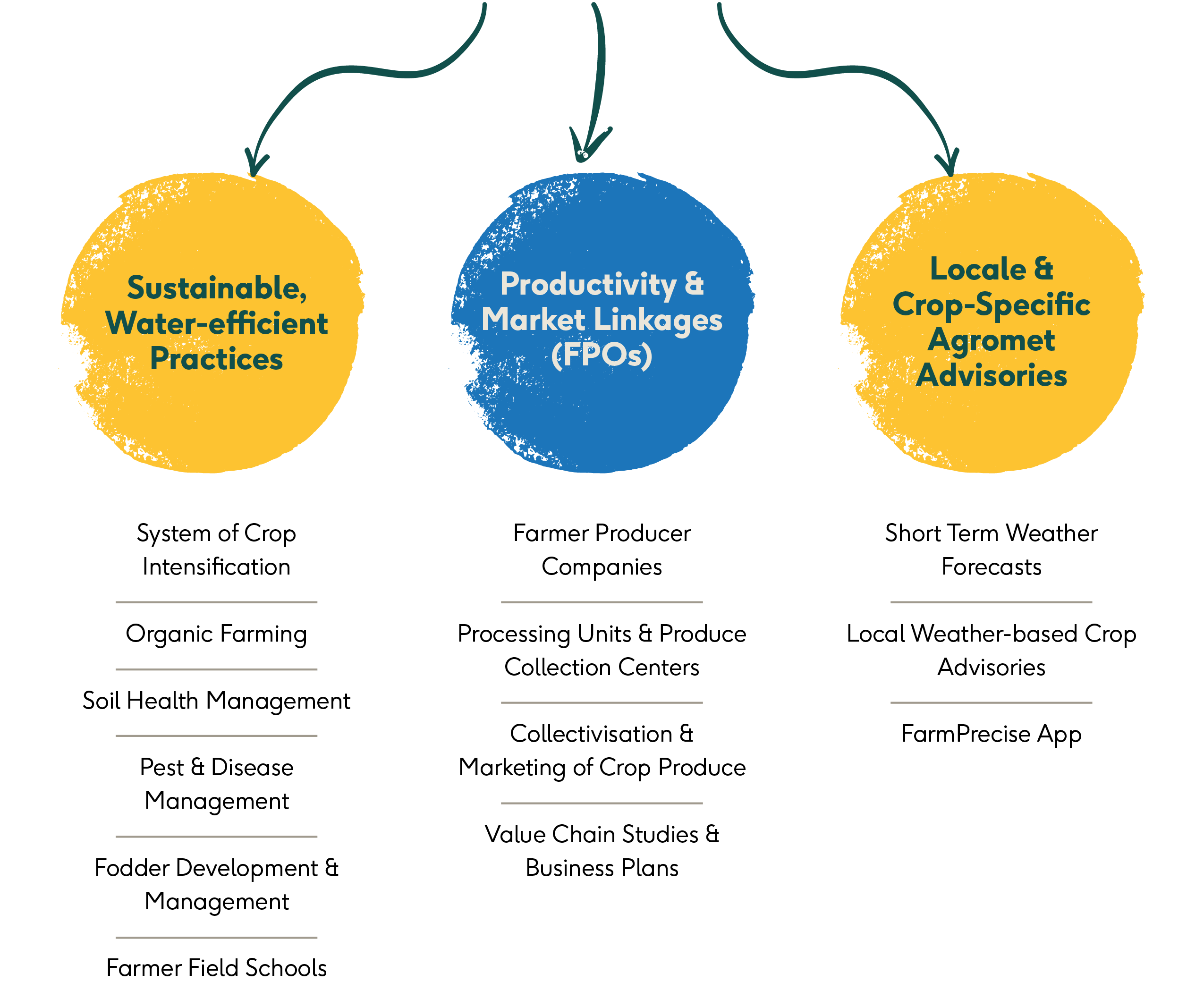
WOTR enhances farm productivity and profitability; makes farming practices climate resilient and nature friendly; and works with communities to arrest land degradation. Our climate resilient agriculture approach helps farmers mitigate risks of climate change, reduce the cost of cultivation, increase productivity and enhance their adaptive capacities.
Our Impact
121%
25%
39
15 - 25 %
increase in area
under triple cropping
increase in
horticulture coverage
Farmer Producer Companies established benefitting over 16,000 farmers
Program Highlights
Our Achievements
Dr. Punjabrao Deskmukh
Krishi Ratna Award
WOTR was awarded Maharashtra State’s highest award in Agriculture by the Government of Maharashtra in 2010
JEEViKA Excellence in Innovation
WOTR was recognised for excellence in innovation in Agriculture in 2014, by JEEViKA, in collaboration with State Innovation Council, Bihar
India Geospatial
Excellence Award
WOTR was awarded in 2014 by the India Geospatial Forum for the Application of Geospatial Technology in Agriculture
11th mBillionth South Asia Awards
WOTR received a special mention for its FarmPrecise Mobile App in 2020-21
Vasantrao Naik Puraskar 2012
WOTR was recognised for excellent work in rural development
Rise of a changemaker
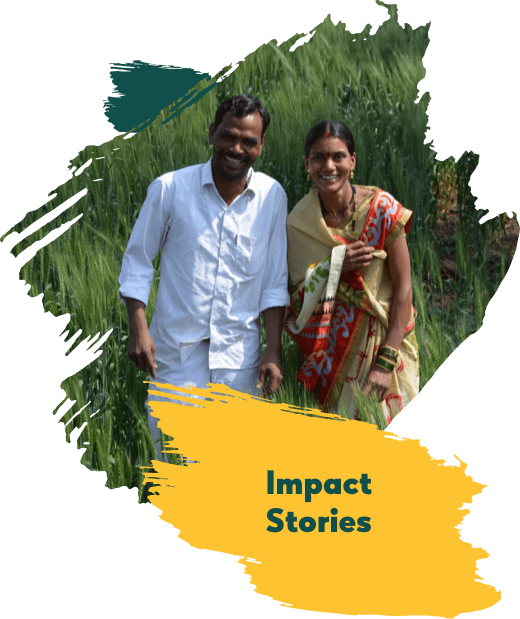
Santosh Salve saved Rs 25,000 by replacing chemical fertilizer and pesticide with home-made vermicompost, and has restored the nutrients in his soil as a result. All thanks to WOTR who took him through a step-by-step training to start a vermicompost unit and provided him with a starter culture of earthworms. But this was just the beginning and today, thanks to WOTR, Santosh is not only a progressive farmer but a thought leader in his community.
To invest in Climate Resilient Agriculture for rural India, reach out to Nitin Kumbhar at nitin.kumbhar@wotr.org.in
Frequently Asked Questions (FAQs)
Watersheds play a foundational role in sustaining agriculture, especially in rainfed regions of India. They regulate the flow and storage of water, replenish groundwater levels, and maintain soil moisture; all of which are essential for crop growth.
Agriculture is the primary source of income and employment for millions of rural households in India, making it a cornerstone of rural development. In irrigated areas, farmers earn up to 60% of their income from agriculture, directly supporting household stability and local economies.
Sustainable agriculture is critical for rural India because conventional, unsustainable farming practices have led to widespread land degradation, loss of soil productivity, and increasing rural poverty. With agricultural productivity in India already among the lowest in the world, the only way to farm is to do it sustainably and adopt climate-resilient agricultural(CRA) practices.
Low agricultural productivity in rural India is driven by several interconnected factors. Land degradation caused by unsustainable farming practices has severely reduced soil fertility and crop yields. Rainfed agriculture, which lacks the water security of irrigated farming, produces yields at only a third of the national average. Limited access to modern tools, climate-smart inputs, and technical knowledge further hampers farm output.
Land degradation is one of the most serious threats to agriculture in rural India. When soil loses its nutrients, structure, and water retention capacity due to unsustainable practices, crop productivity declines sharply fuelling a cycle of rural poverty. Degraded land makes farming economically unviable, forcing many rural households to rely on non-farm income or migrate in search of work.
Climate change poses a growing threat to agricultural productivity, particularly in rainfed rural areas of India. Unpredictable monsoons, prolonged droughts, unseasonal rains, and extreme temperatures disrupt crop cycles, reduce yields, and increase the financial risk for smallholder farmers.

Environmentally friendly agriculture practices focus on maintaining soil health, reducing chemical inputs, and working in harmony with natural ecosystems. WOTR promotes several such practices, including the use of vermicompost as a natural alternative to chemical fertilizers and pesticides; a practice that not only reduces input costs but also restores soil nutrients.
Soil health is the very foundation of agricultural productivity. Healthy soil provides the nutrients, structure, and water retention capacity that crops need to thrive. When soil is degraded through overuse of chemical fertilizers, pesticides, and unsustainable farming practices, crop yields decline and farming becomes increasingly unprofitable.
Crop diversification is an important strategy for reducing agricultural risk and increasing farm income, especially for smallholder farmers in rainfed regions. Relying on a single crop leaves farmers highly vulnerable to weather variability, pest attacks, and market price fluctuations. By diversifying into multiple crops and agro-based activities, farmers can stabilize their income year-round. Crop diversification also aids soil health.
Sustainable agriculture offers farmers a path to long-term productivity, profitability, and resilience. By adopting nature-friendly and climate-smart practices, farmers can reduce input costs, improve soil health, increase yields, and better manage climate risks.
The System of Crop Intensification (SCI) is a sustainable farming method that improves crop yields while using fewer resources. It focuses on better soil health, optimal plant spacing, and reduced water usage. WOTR promotes SCI in Madhya Pradesh to help farmers adopt climate-resilient and cost-effective farming practices.