Water & Land Management

WATER & LAND MANAGEMENT

Agriculture

Why Water & Land?

Unsustainable land and water management practices have adversely impacted the ecosystem in rural India. Deforestation, intensive agriculture, overgrazing and over-extraction of groundwater are threatening agriculture, leading to distress migration and a loss of biodiversity and ecosystem services.

While the value of natural resources is only around 7% of the national GDP, it amounts to 57% of the livelihood of India’s rural poor. This is even more crucial with the fact that India accounts for 18% of the global population and merely 2.4% of the world’s landmass.

WOTR has been working on the issue by adopting a holistic and participative approach.

Water & Land

Our Interventions

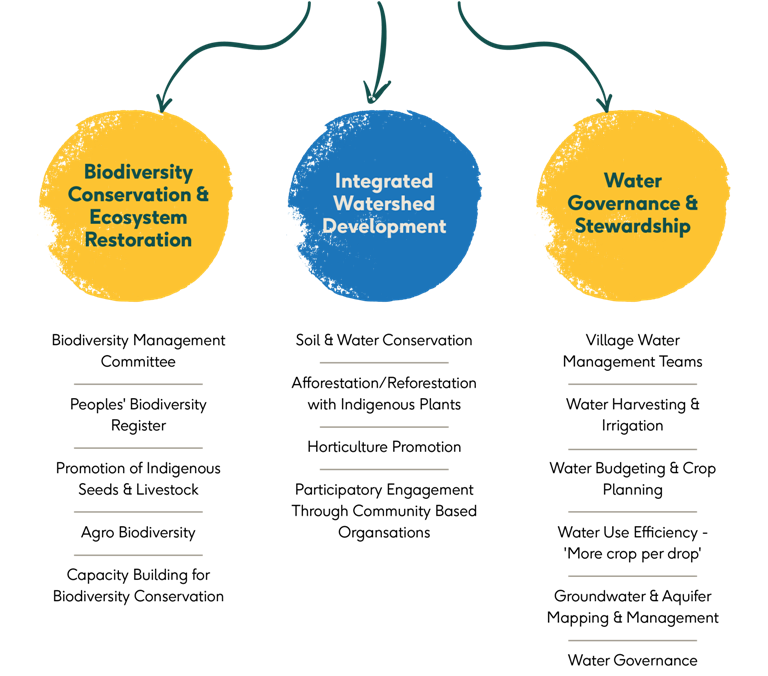
With its strategic focus on reviving groundwater levels, conserving natural vegetation and enabling rural communities, WOTR is mitigating environmental degradation in rural India. Here are our interventions:

Water & Land

Our Impact

2.58

347.55

1.45

78,000

million people from 2432 villages impacted through watershed development activities

cr litres of water storage capacity created during the year 2021-22

million hectares of area impacted through watershed development and climate change adaptation activities

people and over 22,300 school children provided access to drinking water facilities

Our Impact

2.58

347.55

million people from 2432 villages impacted through watershed development activities

cr litres of water storage capacity created during the year 2021-22

1.45

78,000

million hectares of area impacted through watershed development and climate change adaptation activities

people and over 22,300 school children provided access to drinking water facilities

Water & Land
Water & Land

Program Highlights

Watershed Development to EbA: key messages and recommendations

Water Stewardship Initiative: Experiences and Learnings

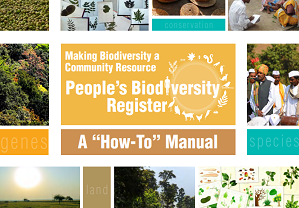
People’s Biodiversity Register: A how-to manual

Ecosystem-based Adaptation in Maharashtra: A short-film

Agriculture

Our Achievements

Agriculture

Land for Life award 2017

WOTR won the award instituted by the United Nations Convention to Combat Desertification (UNCCD)

Agriculture

Award of Excellence for Veljal Watershed 2014

WOTR won the award instituted by the Department of Rural Development of Andhra Pradesh

Agriculture

FICCI Water Award 2013

Presented to WOTR under FICCI’s Annual Water Awards instituted in association with HSBC

Agriculture

Vasantrao Naik Puraskar 2012

Presented to WOTR for excellent work done in rural development

Agriculture

JSW-TOI Earth Care Award 2010

Won under the category “Community Based Mitigation and Adaptation to Climate Change”

Agriculture

Swiss Re Award

WOTR was runner up for Sustainable Watershed Management

Agriculture
Kyoto World Water Grand Prize 2009

Awarded to WOTR during the 5th World Water Forum in Istanbul, Turkey

Agriculture

Aakar Jal Puraskar Award 2006

Received for a watershed project by then Hon. Deputy Chief Minister of Maharashtra – R R Patil

Agriculture

Vasantrao Naik Award 2001

Received for outstanding work in soil and water conservation

WATER & LAND MANAGEMENT STORY

Protecting biodiversity, transforming lives

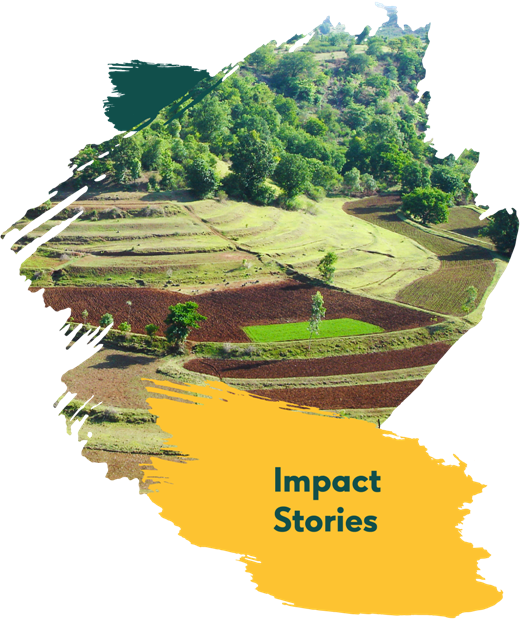
The parched lands of Purushwadi village were a common sight a few years back. Despite receiving good rainfall, people faced water shortage in other seasons that heavily impacted agriculture and their wellbeing.
But all this changed with WOTR’s Ecosystem-based Adaptation (EbA) approach. By promoting sustainable practices focused on biodiversity conservation, natural resource management and climate change adaptation, the people of Purushwadi are now witnessing a reversal in land degradation. With consistent intervention in the areas, the impact studies have reported a 40% increase in people’s income!

To invest in sustainable Land and Water Management for rural India, reach out to Harish Daware at harish.daware@wotr.org.in

Frequently Asked Questions (FAQs)

What is the importance of land and natural resources in rural livelihood?

Natural resources like water and soil are the backbone of rural livelihoods in India. While they contribute only around 7% to the national GDP, they account for 57% of the livelihood of India’s rural disprivileged residents. Given that India holds 18% of the global population on just 2.4% of the world’s landmass, sustainable land and water management is not just important, it’s critical for the survival and wellbeing of millions of rural communities.

What are the major causes of land degradation?

Land degradation is mainly caused by deforestation, intensive agriculture, overgrazing, and excessive groundwater extraction. These practices reduce soil fertility, increase erosion, and damage ecosystems and agricultural productivity.

What are the major causes of water scarcity?

Water scarcity in rural India is primarily driven by unsustainable land and water management practices. Deforestation reduces the land’s ability to retain rainwater, while over-extraction of groundwater depletes underground reserves. Intensive agriculture and overgrazing further degrade the land, limiting its capacity to absorb and store water; even in areas that receive adequate rainfall.

What is the impact of over-extraction of groundwater?

Over-extraction of groundwater is one of the key threats to rural agriculture and livelihoods. It leads to declining groundwater levels, making water unavailable during dry seasons. This directly impacts agricultural productivity, triggers distress migration as farming becomes unsustainable, and contributes to the broader loss of biodiversity and essential ecosystem services. WOTR specifically focuses on reviving groundwater levels as a core part of its watershed development approach.

What is watershed development?

Watershed development is a holistic, community-driven approach to managing land, water, and vegetation within a specific geographical area, known as a watershed or drainage basin. It focuses on conserving and regenerating natural resources such as soil, water, and plants to balance environmental sustainability with human needs. In India, watershed development plays a crucial role in supporting rainfed agriculture, reducing drought and flood risks, and improving livelihoods by treating the entire catchment area from ridge to valley.

What does water stewardship mean?

Water stewardship is the responsible management and conservation of water resources in a socially equitable and environmentally sustainable way. It includes practices like water harvesting, budgeting, and watershed management. WOTR trains local water stewards in Madhya Pradesh to improve community water management.