Livelihoods

Livelihoods

Agriculture

Why Livelihoods?

85% of India’s farmers own land less than 2 hectares and practice subsistence farming amidst degraded natural resources and erratic weather. Lack of reliable income options not only impacts the community’s well being but also leads to challenges such as poverty and distress migration.

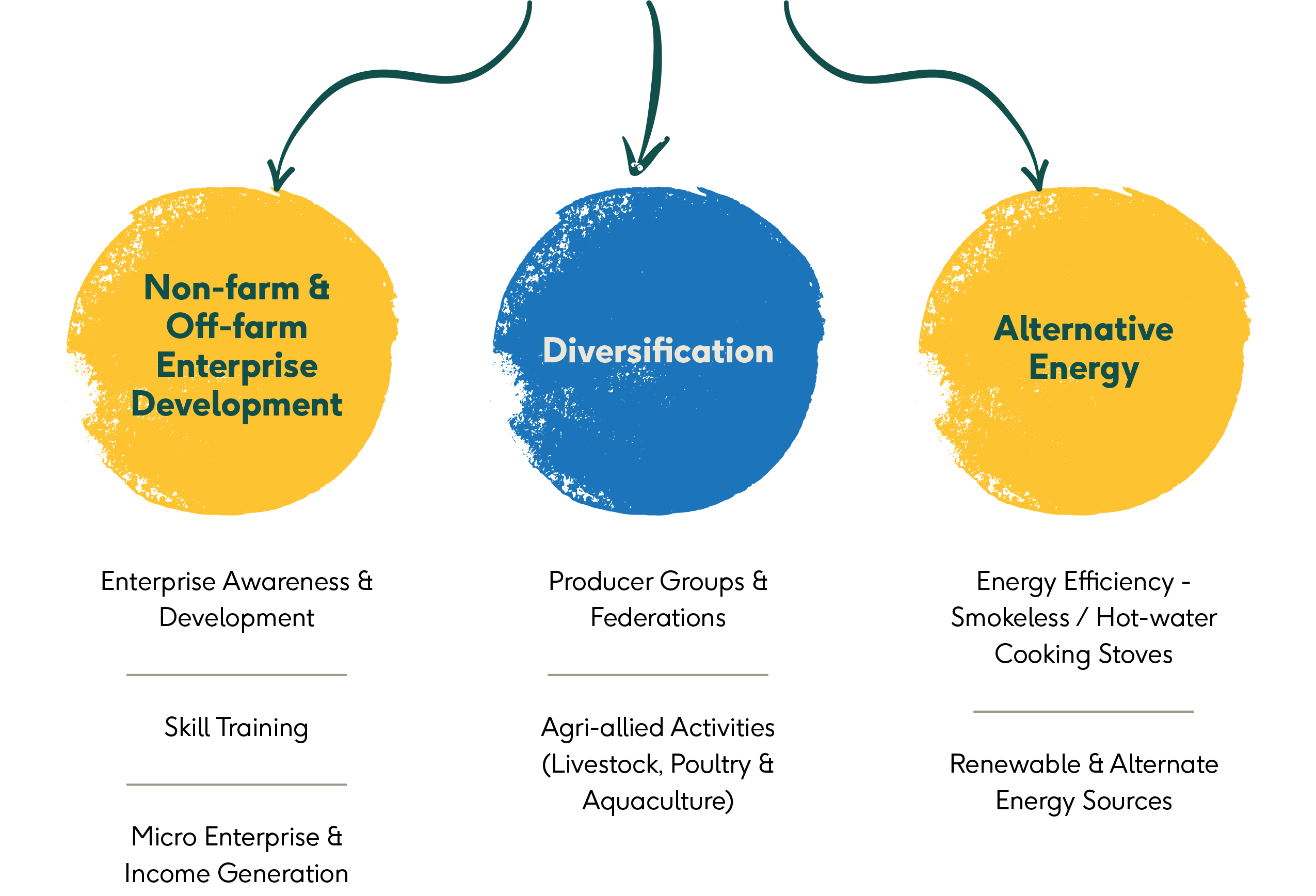
There is a need to reduce the overdependence on traditional agriculture by introducing viable alternatives. The diversification from agriculture into other Agro-based livelihoods, rural enterprises and non-farm sectors is an important source of income, economic growth and transformation not just for rural India, but for the whole economy as well.

Water & Land

Our Interventions

WOTR is empowering rural communities by helping them explore and leverage the agri-allied and other non-farm livelihood options, demonstrating the impact of a dedicated livelihood NGO. We provide handholding support to our communities by educating them and building their capacity to adopt various livelihood alternatives. WOTR aims to diversify the sources of people’s income and help them manage risk in agriculture.

Agriculture

Our Impact

4,400

25%

73

50%

new enterprises started with a focus on livelihood diversification

increase in non-farm incomes

livelihood training and exposure visits conducted in 2021-22, covering over 2000 participants

decline in distress migration

Our Impact

4,400

25%

new enterprises started with a focus on livelihood diversification

increase in non-farm incomes

73

50%

livelihood training and exposure visits conducted in 2021-22, covering over 2000 participants

decline in distress migration

Water & Land
Water & Land

Program Highlights

Watershed Development, Resilience and
Livelihood Security: An Empirical Analysis

A Journey Travelled Together For Creating Sustainable Communities in Odisha

Addressing Household Energy Needs the
Clean Fuel Way:

Building Capacities of villagers

Agriculture

Our Achievements

Agriculture

Award for Innovation in Technology

Presented by Maharashtra State Rural Livelihood Mission (MSRLM), 2014

Agriculture

Vasantrao Naik Puraskar 2012

WOTR received this award for excellent work done in rural development

Agriculture

Land award 2017

Received for innovations and efforts for achieving Sustainable Development Goals (SDGs), in particular, SDG 15.3 -Life on Land

Agriculture

Social Entrepreneurship Award

Mr. Crispino Lobo, Co-Founder and Managing Trustee of WOTR, received the prestigious award in November 2005, from the Schwab Foundation, Switzerland

Agriculture

JSW-TOI Earth Care Award, 2010 (Commendation)

WOTR received a “Commendation” with a Memento under the category – “Community Based Mitigation and Adaptation to Climate Change”

WATER & LAND MANAGEMENT STORY

Kamlakola takes charge

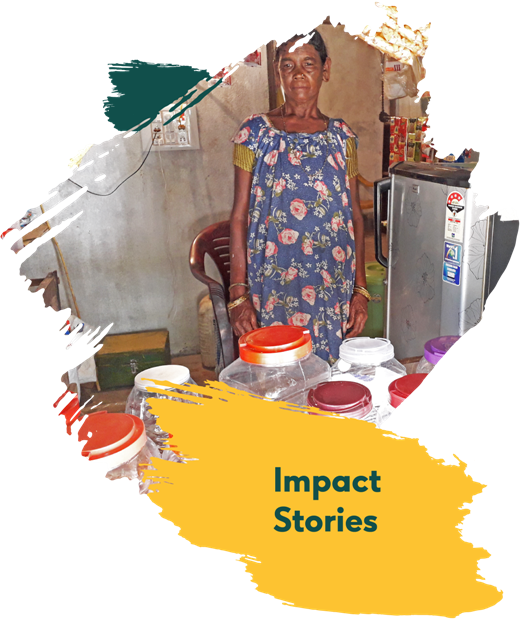
The untimely death of her husband, the primary earning member of the family, had left Kamalakola devastated. The responsibility of taking care of the entire family fell on her shoulders. Kamalakola was confused and scared of her future until one of her neighbours told her about WOTR’s implementation of HDFC Bank’s Holistic Rural Development Program.
Today she is a confident and financially independent woman earning a daily profit of Rs 200 from her grocery shop. HRDP has changed Kamalakola’s life.

To invest in sustainable Livelihoods for rural India, reach out to Sandeep Jadhav at sandeep.jadhav@wotr.org.in

Frequently Asked Questions (FAQs)

What is the importance of land and natural resources in rural livelihood?

Land and natural resources are the foundation of rural livelihoods in India. With 85% of India’s farmers owning less than 2 hectares of land and practicing subsistence farming, the quality of natural resources directly determines their income and food security. 

What is rural livelihood diversification?

Rural livelihood diversification is the process of expanding income sources beyond traditional agriculture into agro-allied activities, rural enterprises, and non-farm sectors. Since subsistence farming alone is no longer sufficient for millions of smallholder farmers, diversification provides alternative and supplementary income streams that reduce risk and improve financial resilience.

What are the challenges faced by farmers in rural areas?

Farmers in rural India face several interconnected challenges that affect their livelihoods and overall economic stability. A major issue is small landholdings, with nearly 85% of farmers owning less than 2 hectares of land, which limits agricultural productivity and income generation. In addition, degraded natural resources such as depleted soil fertility and declining water availability reduce crop output and make farming less sustainable.

What are the causes of rural distress?

Rural distress in India is caused by a combination of structural, economic, and environmental challenges that deeply affect rural communities and livelihoods. One of the primary causes is subsistence farming on degraded land, which provides very limited income and leaves little scope for savings or growth.

Why is skill development important for livelihood security?

Skill development is a critical enabler of livelihood security, especially for rural communities dependent on subsistence farming. Without the right skills, farmers and rural households cannot transition into alternative income-generating activities.

Why is livelihood diversification important in rural areas?

Livelihood diversification is extremely important in rural areas because it reduces excessive dependence on traditional agriculture, which is increasingly affected by degraded natural resources, climate change, and unpredictable weather conditions.

How do livelihood programs reduce poverty?

Livelihood programs help reduce poverty by creating sustainable and long-term income opportunities for rural communities, addressing both economic and social challenges at the grassroots level. These programs focus on capacity building and skill development, enabling individuals to start small enterprises, access non-farm income opportunities, and improve their earning potential.