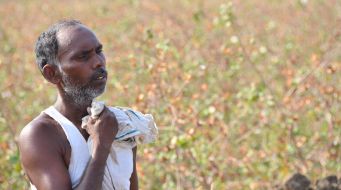
Watershed development in Rajasthan addresses water scarcity, land degradation, and desertification through sustainable water management, rainwater harvesting, and soil conservation, improving agriculture and rural livelihoods.
A Better Tomorrow
Stories, Practices, and Solutions
Imagine a barren patch of land, lifeless, without hope, dismissed as worthless. Now imagine transforming not one, not two, but 90 such spaces into green, thriving hubs of life, prosperity, and sustainability. This is not a distant dream; it’s a mission. A mission to fuse the power of nature, technology, and human will
The complexity of the challenges faced by semi-arid farming systems in India necessitates a holistic understanding of climate resilience, one that integrates both climate and development concerns.
India is also home to a multitude of Indigenous Peoples and Local Communities (IPLCs), each with unique ethical, cultural, and traditional practices. For centuries, these communities have harnessed their Traditional Ecological Knowledge (TEK) to sustain their livelihoods and preserve their cultural identities.
The crescent bund is one of the most effective in-situ soil and water moisture conservation methods used in cashew plantations
This blog post is based on a unique multilayer farming initiative implemented as part of the “Integrated Water Resources Development and Promotion of Ecosystem-based Adaptation (EbA) in Maharashtra and Telangana—A Practice and Knowledge Embedded Approach” project, which is supported by the Honeywell Hometown Solutions India Foundation (HHSIF).
As climate change tightens its grip, the resilient communities in Chhattisgarh need your support more than ever
As Axis Bank Foundation strives to improve the livelihoods of two million households by 2026-27, one of the intensifying and worrying hurdles our communities face is the disproportionate impact of climate change. Climate adaptation is, hence, an urgency!
Carbon footprint is the total amount of greenhouse gases (including carbon dioxide and methane) that are generated by human actions. By making small changes to our daily actions, one can decrease their carbon footprint.
October Heat refers to the rise in temperature that occurs during the post-monsoon and pre-winter season. In recent years, however, October has increasingly felt like an extension of summer rather than an early indication of winter.
Watershed development in Rajasthan addresses water scarcity, land degradation, and desertification through sustainable water management, rainwater harvesting, and soil conservation, improving agriculture and rural livelihoods.
Imagine a barren patch of land, lifeless, without hope, dismissed as worthless. Now imagine transforming not one, not two, but 90 such spaces into green, thriving hubs of life, prosperity, and sustainability. This is not a distant dream; it’s a mission. A mission to fuse the power of nature, technology, and human will
The complexity of the challenges faced by semi-arid farming systems in India necessitates a holistic understanding of climate resilience, one that integrates both climate and development concerns.
India is also home to a multitude of Indigenous Peoples and Local Communities (IPLCs), each with unique ethical, cultural, and traditional practices. For centuries, these communities have harnessed their Traditional Ecological Knowledge (TEK) to sustain their livelihoods and preserve their cultural identities.
The crescent bund is one of the most effective in-situ soil and water moisture conservation methods used in cashew plantations
This blog post is based on a unique multilayer farming initiative implemented as part of the “Integrated Water Resources Development and Promotion of Ecosystem-based Adaptation (EbA) in Maharashtra and Telangana—A Practice and Knowledge Embedded Approach” project, which is supported by the Honeywell Hometown Solutions India Foundation (HHSIF).
As climate change tightens its grip, the resilient communities in Chhattisgarh need your support more than ever
As Axis Bank Foundation strives to improve the livelihoods of two million households by 2026-27, one of the intensifying and worrying hurdles our communities face is the disproportionate impact of climate change. Climate adaptation is, hence, an urgency!
Carbon footprint is the total amount of greenhouse gases (including carbon dioxide and methane) that are generated by human actions. By making small changes to our daily actions, one can decrease their carbon footprint.
October Heat refers to the rise in temperature that occurs during the post-monsoon and pre-winter season. In recent years, however, October has increasingly felt like an extension of summer rather than an early indication of winter.
By Categories
By Tags
Drawing on WOTR’s grassroots experience, this piece explores the powerful connection between water security, ecosystem restoration, agriculture and nutrition security in rural India.
Exploring World Water Week through our interventions in implementing ecohydrology-based Nature-based Solutions in Maharashtra and Telangana
This World Water Week, explore how water access shapes pastoral livelihoods, migration routes and resilience across India’s changing landscapes.
India’s mosquito fight is evolving as climate change, urbanisation and insecticide resistance reshape malaria, dengue and other disease threats.
An animated film series follows 11 Farmer Producer Companies and 11,800+ farmers building resilient livelihoods through markets, farming and EbA.
Electric fencing turned fear into full harvests, as one Chhattisgarh farmer finally grew Rabi crops without losing them to animals.
सोलर फेंसिंग ने रामगढ़ के हरि भगत सिंह का डर मिटाया, अब वह जंगली जानवरों से बेखौफ होकर पूरी ज़मीन पर रबी की फसल उगाते हैं।
Raghubir’s story shows how entrepreneurship can begin with a simple idea, the right support, and a little confidence creating a thriving livelihood.