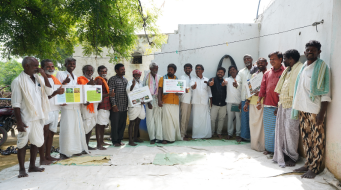
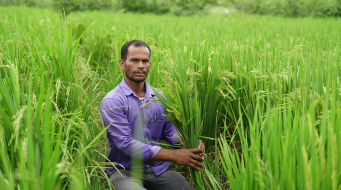
On the occasion of World Environment Day, this blog underscores the pressing necessity for present and upcoming generations to address land degradation and desertification. With 40% of the world’s land degraded and impacting half of the global population, prompt action is imperative.
A Better Tomorrow
Stories, Practices, and Solutions
Despite initial skepticism from men in their village, three women from Yellammathada started a successful paper plate-making business. Through a training program by HSBC, they launched their venture with a loan and received equipment and training. The business has allowed them to repay their loan, earn profits, and gain financial independence.
Lambadi women in Telangana have revitalised the traditional craft of Maggam embroidery, enabling them to earn a stable income from home. This change, initiated by a training program from WOTR, has allowed them to avoid migration for labor work and support their families better. Women now earn Rs 5,000-10,000 through their embroidery, which also preserves their cultural heritage.
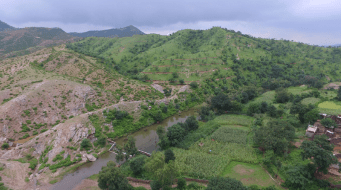
Located in a rain-fed area with limited water availability, residents say farming in Bhaironkonda has become particularly precarious in the last few years, owing to changing climatic conditions, and increasing costs of agriculture. Distressed, and desperate for solutions, some farmers started participating in Farmer Field Schools (FFS) organised by WOTR in 2019, as part of Axis Bank Foundation’s Sustainable Livelihoods Programme.
Paddy is the staple food for the majority of Narayanpet’s population and is grown in these parts extensively. Its cultivation has always been traditional, with farmers flooding the fields to grow it. Given the severe land and water constraints, WOTR decided to promote System of Rice Intensification (SRI) and System of Crop Intensification (SCI) amongst farmers under Axis Bank Foundation’s Sustainable Livelihoods Programme.
In today’s rapidly evolving business landscape, the concept of environmental sustainability is moving from being a philanthropic trend to a crucial business imperative. This blog post will delve into why environmental sustainability matters to businesses, exploring the key benefits, strategies, and ways to measure your progress.
Beneath the scorching sun of India’s vast plains, a quiet revolution is stirring. Not one fueled by the roar of tractors, but by the whisper of wind through thriving plants, the hum of a revitalised ecosystem. This silent uprising, rooted in ancestral wisdom and ecological harmony, is Natural Farming.
This blog explores the challenges and solutions towards achieving Sustainable Development Goal 6 (Clean Water and Sanitation for All) in India, emphasizing the importance of collective action and innovative approaches.
This article highlights ten commendable NGOs that are at the forefront of environmental sustainability in India. These organisations are not just tackling environmental concerns but are also empowering communities towards a sustainable and resilient future.
This story is from the booklet ‘Seeding Entrepreneurs: Stories of Women Entrepreneurs from Karjat and Shrigonda Blocks in Ahmednagar District, Maharashtra,’ published as a part of the ‘Promoting Entrepreneurship, Employment Opportunities, and Increased Incomes in Maharashtra’ programme of HSBC.
On the occasion of World Environment Day, this blog underscores the pressing necessity for present and upcoming generations to address land degradation and desertification. With 40% of the world’s land degraded and impacting half of the global population, prompt action is imperative.
Despite initial skepticism from men in their village, three women from Yellammathada started a successful paper plate-making business. Through a training program by HSBC, they launched their venture with a loan and received equipment and training. The business has allowed them to repay their loan, earn profits, and gain financial independence.
Lambadi women in Telangana have revitalised the traditional craft of Maggam embroidery, enabling them to earn a stable income from home. This change, initiated by a training program from WOTR, has allowed them to avoid migration for labor work and support their families better. Women now earn Rs 5,000-10,000 through their embroidery, which also preserves their cultural heritage.
Located in a rain-fed area with limited water availability, residents say farming in Bhaironkonda has become particularly precarious in the last few years, owing to changing climatic conditions, and increasing costs of agriculture. Distressed, and desperate for solutions, some farmers started participating in Farmer Field Schools (FFS) organised by WOTR in 2019, as part of Axis Bank Foundation’s Sustainable Livelihoods Programme.
Paddy is the staple food for the majority of Narayanpet’s population and is grown in these parts extensively. Its cultivation has always been traditional, with farmers flooding the fields to grow it. Given the severe land and water constraints, WOTR decided to promote System of Rice Intensification (SRI) and System of Crop Intensification (SCI) amongst farmers under Axis Bank Foundation’s Sustainable Livelihoods Programme.
In today’s rapidly evolving business landscape, the concept of environmental sustainability is moving from being a philanthropic trend to a crucial business imperative. This blog post will delve into why environmental sustainability matters to businesses, exploring the key benefits, strategies, and ways to measure your progress.
Beneath the scorching sun of India’s vast plains, a quiet revolution is stirring. Not one fueled by the roar of tractors, but by the whisper of wind through thriving plants, the hum of a revitalised ecosystem. This silent uprising, rooted in ancestral wisdom and ecological harmony, is Natural Farming.
This blog explores the challenges and solutions towards achieving Sustainable Development Goal 6 (Clean Water and Sanitation for All) in India, emphasizing the importance of collective action and innovative approaches.
This article highlights ten commendable NGOs that are at the forefront of environmental sustainability in India. These organisations are not just tackling environmental concerns but are also empowering communities towards a sustainable and resilient future.
This story is from the booklet ‘Seeding Entrepreneurs: Stories of Women Entrepreneurs from Karjat and Shrigonda Blocks in Ahmednagar District, Maharashtra,’ published as a part of the ‘Promoting Entrepreneurship, Employment Opportunities, and Increased Incomes in Maharashtra’ programme of HSBC.
By Categories
By Tags
A story of how water stewardship empowered Bhagwat Gavande to become a trusted rural resource leader in his village
El Niño exposes hidden economic costs of degraded ecosystems, revealing why water stewardship and natural capital investment strengthen rural climate resilience.
Crop simulation reveals a startling truth: without adaptation, South Asian farmers could lose up to half their harvest by 2047. How can simulation help with adaptation?
Explore how 3D mapping of aquifers changed how Mhaswandi and Masai practice water stewardship.
Mangroves do far more than store carbon. They’re coastal shields, fish nurseries, biodiversity havens, and living systems tied to millions of lives.
How climate change affects women farmers in India, and the solutions they are building for a more resilient future.
Observed every year on 16 July, World Snake Day aims to dispel myths and raise awareness about one of the most misunderstood creatures on Earth.
This film tells the story of what changed when over 11,800 farmers came together to build their own Farmer Producer Companies