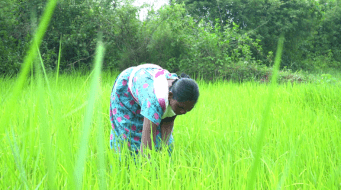
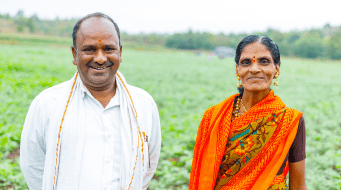
Through a watershed development project by Wells Fargo and WOTR, Lingi village, including farmer Bapurao Rajendra Patil’s land, transformed dramatically. Water structures like Water Absorption Trenches increased well water levels by 3 feet, enabling cultivation across all 15 acres year-round.
A Better Tomorrow
Stories, Practices, and Solutions
Furkhan and Shahinbee Patel struggled with farming due to severe water scarcity on their 11-acre farm in Hokrana village of Karnataka. In 2022-23, a restoration project by Wells Fargo and WOTR created a water harvesting potential of 22 million liters, significantly improving their irrigation and doubling their harvests.
Paulina Mundu, a 40-year-old farmer in Khunti, Jharkhand, fulfilled her childhood dream of farming upon returning home. However, water scarcity posed a challenge, leading her to construct a farm pond under MGNREGA in 2017. Despite initial limitations, assistance from Axis Bank Foundation and WOTR in 2019 enabled Paulina to expand and improve the pond, enhancing irrigation capacity.
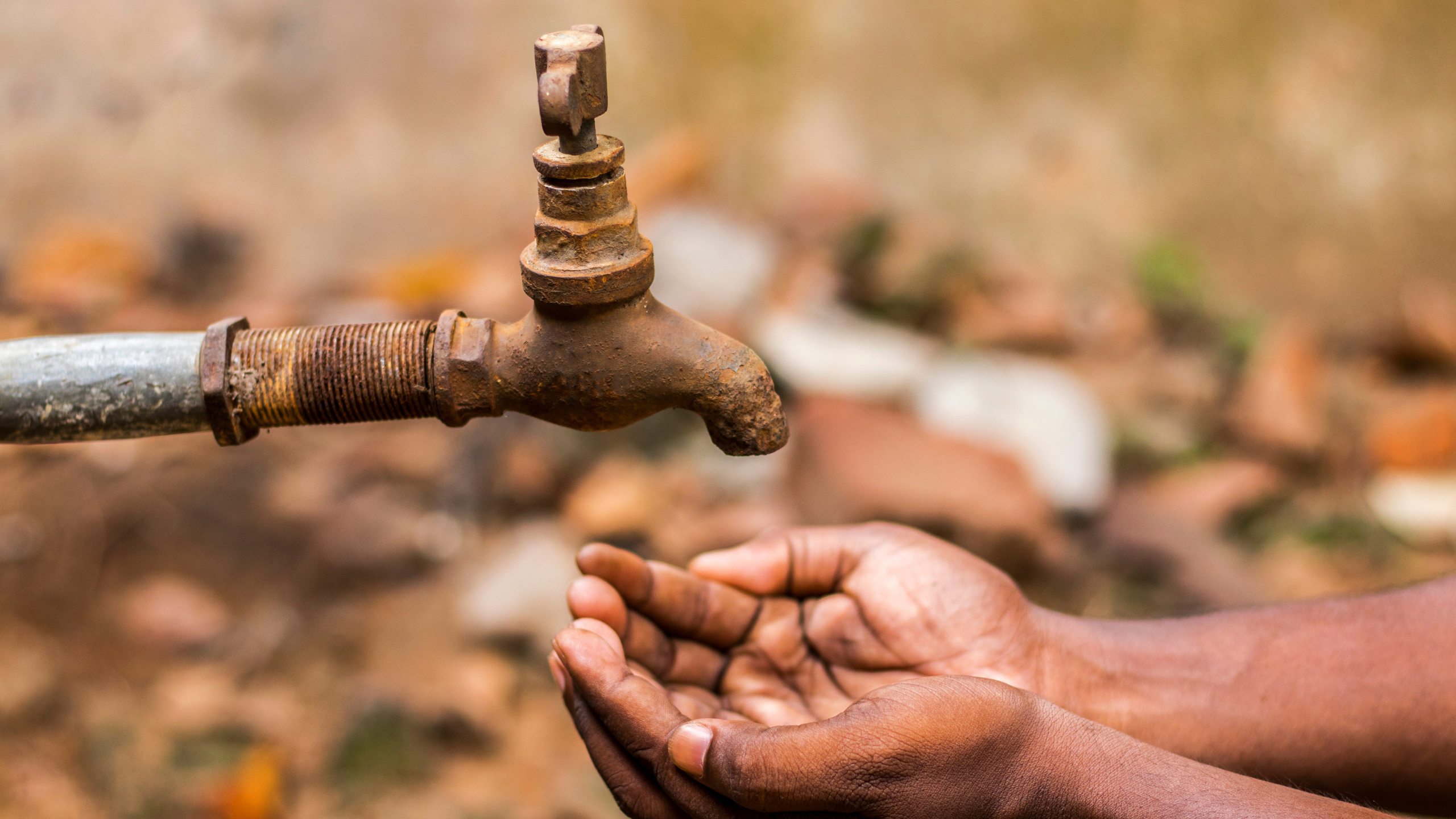
Water is essential for life and a cornerstone of sustainable development. Climate change, population growth, increasing urbanisation, and unsustainable practices are placing unprecedented strain on global water resources. Achieving water security – the ability to ensure sufficient, safe and accessible water for everyone’s needs – has become a pressing challenge in the 21st century.
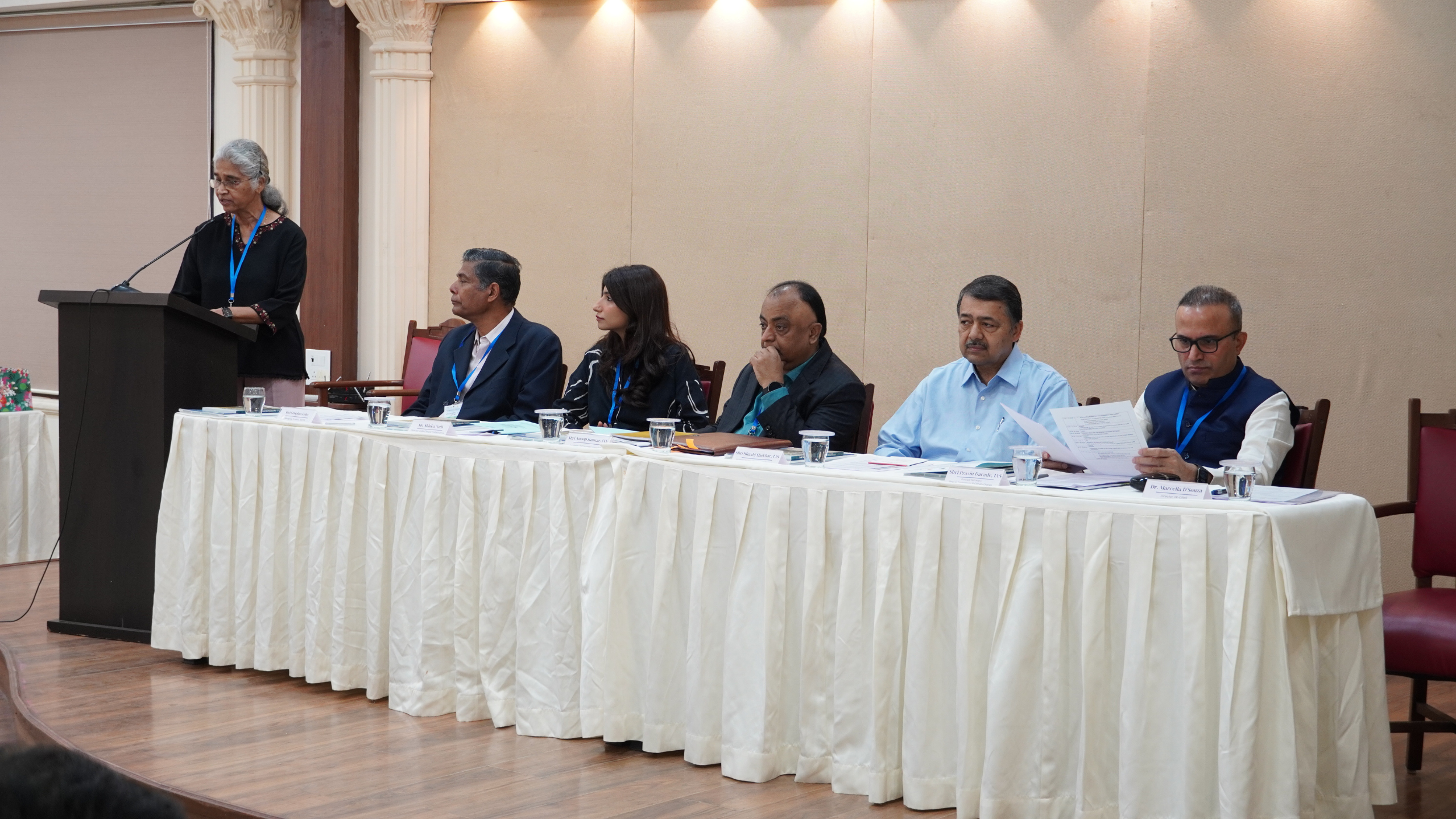
In response to Maharashtra’s deepening water crisis, a critical one-day workshop titled ‘Securing water in the time of climate change through natural ecosystems management” brought together leading experts, policymakers, and stakeholders on March 21, 2024.
Nature, with its highly erratic behaviour, coupled with inadequate water conservation measures, has left villages grappling with severe drought situations like water scarcity, dependency on tankers, crop failure, and distressed migration. Umara is one of the participating villages in Kalamb block. In this village, two check dams are constructed through project support, bringing about a transformative change.
As the world’s most populous nation now, India grapples with a complex water security challenge. While blessed with diverse water resources from snow-capped mountains to perennial rivers, the story of per capita water availability paints a concerning picture.
In rural India, water scarcity is a harsh reality impacting communities’ lives profoundly. Through watershed development, communities are empowered to heal the land holistically, from ridge to valley, ensuring water security, improved health, and livelihoods.
In a landmark move poised to transform water stewardship across Maharashtra’s vulnerable regions, the Water Supply & Sanitation Department (WSSD), under the Government of Maharashtra, has inked a Memorandum of Understanding (MOU) with the Watershed Organisation Trust (WOTR), Pune.
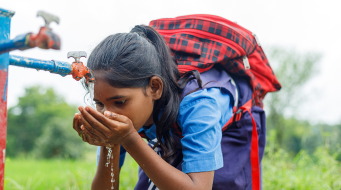
This blog explores the challenges and solutions towards achieving Sustainable Development Goal 6 (Clean Water and Sanitation for All) in India, emphasizing the importance of collective action and innovative approaches.
Through a watershed development project by Wells Fargo and WOTR, Lingi village, including farmer Bapurao Rajendra Patil’s land, transformed dramatically. Water structures like Water Absorption Trenches increased well water levels by 3 feet, enabling cultivation across all 15 acres year-round.
Furkhan and Shahinbee Patel struggled with farming due to severe water scarcity on their 11-acre farm in Hokrana village of Karnataka. In 2022-23, a restoration project by Wells Fargo and WOTR created a water harvesting potential of 22 million liters, significantly improving their irrigation and doubling their harvests.
Paulina Mundu, a 40-year-old farmer in Khunti, Jharkhand, fulfilled her childhood dream of farming upon returning home. However, water scarcity posed a challenge, leading her to construct a farm pond under MGNREGA in 2017. Despite initial limitations, assistance from Axis Bank Foundation and WOTR in 2019 enabled Paulina to expand and improve the pond, enhancing irrigation capacity.
Water is essential for life and a cornerstone of sustainable development. Climate change, population growth, increasing urbanisation, and unsustainable practices are placing unprecedented strain on global water resources. Achieving water security – the ability to ensure sufficient, safe and accessible water for everyone’s needs – has become a pressing challenge in the 21st century.
In response to Maharashtra’s deepening water crisis, a critical one-day workshop titled ‘Securing water in the time of climate change through natural ecosystems management” brought together leading experts, policymakers, and stakeholders on March 21, 2024.
Nature, with its highly erratic behaviour, coupled with inadequate water conservation measures, has left villages grappling with severe drought situations like water scarcity, dependency on tankers, crop failure, and distressed migration. Umara is one of the participating villages in Kalamb block. In this village, two check dams are constructed through project support, bringing about a transformative change.
As the world’s most populous nation now, India grapples with a complex water security challenge. While blessed with diverse water resources from snow-capped mountains to perennial rivers, the story of per capita water availability paints a concerning picture.
In rural India, water scarcity is a harsh reality impacting communities’ lives profoundly. Through watershed development, communities are empowered to heal the land holistically, from ridge to valley, ensuring water security, improved health, and livelihoods.
In a landmark move poised to transform water stewardship across Maharashtra’s vulnerable regions, the Water Supply & Sanitation Department (WSSD), under the Government of Maharashtra, has inked a Memorandum of Understanding (MOU) with the Watershed Organisation Trust (WOTR), Pune.
This blog explores the challenges and solutions towards achieving Sustainable Development Goal 6 (Clean Water and Sanitation for All) in India, emphasizing the importance of collective action and innovative approaches.
By Categories
By Tags
A story of how water stewardship empowered Bhagwat Gavande to become a trusted rural resource leader in his village
El Niño exposes hidden economic costs of degraded ecosystems, revealing why water stewardship and natural capital investment strengthen rural climate resilience.
Crop simulation reveals a startling truth: without adaptation, South Asian farmers could lose up to half their harvest by 2047. How can simulation help with adaptation?
Explore how 3D mapping of aquifers changed how Mhaswandi and Masai practice water stewardship.
Mangroves do far more than store carbon. They’re coastal shields, fish nurseries, biodiversity havens, and living systems tied to millions of lives.
How climate change affects women farmers in India, and the solutions they are building for a more resilient future.
Observed every year on 16 July, World Snake Day aims to dispel myths and raise awareness about one of the most misunderstood creatures on Earth.
This film tells the story of what changed when over 11,800 farmers came together to build their own Farmer Producer Companies