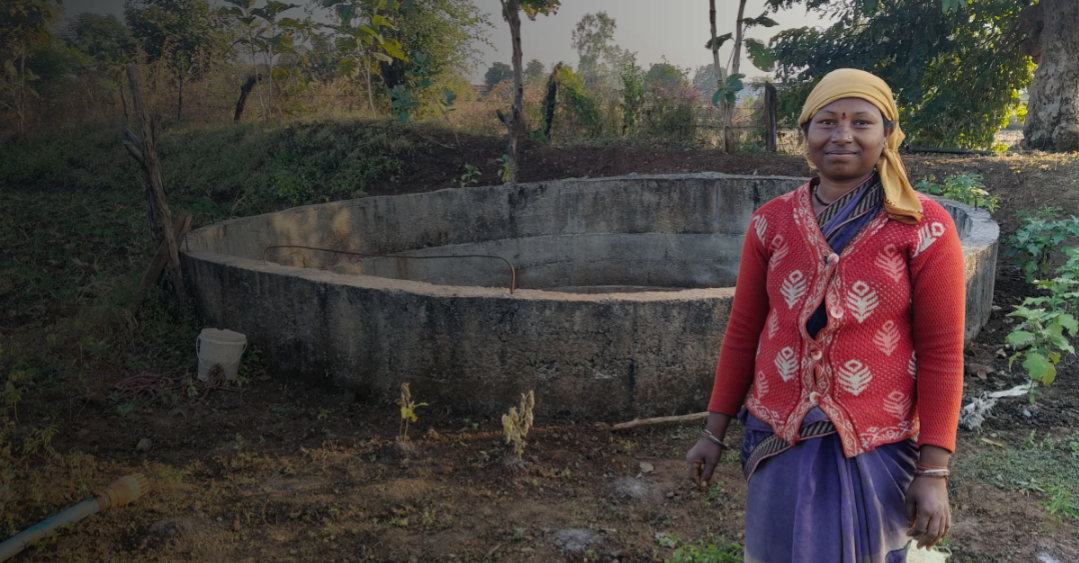
A Group Irrigation Well is a shared water source used and managed collectively by a group of farmers to provide reliable irrigation for agricultural activities.
Group Irrigation Wells provide more reliable access to water, allowing farmers to cultivate additional crops, diversify their farming systems and reduce dependence on rainfall.
They can reduce farmers’ dependence on unpredictable rainfall by improving access to irrigation, helping them manage delayed or uneven rainfall and maintain agricultural production.
Reliable irrigation can enable farmers to cultivate more than one crop in a year, diversify into higher-value crops and extend cultivation beyond the rainy season, creating opportunities for more stable farm incomes.
Group Irrigation Wells can be used in rural farming communities where farmers face limited or seasonal access to groundwater and need a shared source of irrigation for agricultural production.
Water harvesting can improve local water availability, recharge groundwater and support irrigation, helping rural communities reduce their vulnerability to changing rainfall patterns and periods of water scarcity.
How access to water helped Draupati turn her skills and ambition into opportunity, diversify her farming, and build a more secure livelihood for her family.
India drylands face mounting climate pressures. Discover how IDIA is carrying integrated research, regional consultations and community knowledge to guide informed decisions and strengthen resilience.
Farmer Producer Companies help smallholders access dairy schemes, productive assets, digital services and local support to strengthen rural livelihoods and incomes.