India’s agricultural sector faces challenges from conventional practices, but adopting natural farming can enhance soil quality, promote biodiversity, and improve food security while benefiting farmers economically.
A Better Tomorrow
Stories, Practices, and Solutions
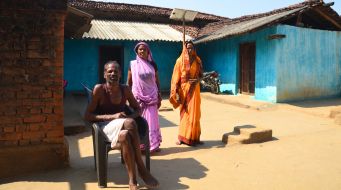
Sahulia Singh’s family, once reliant on a limited diet of rice and potatoes, now grows a variety of vegetables through WOTR’s kitchen garden initiative, improving their nutrition and reducing dependence on distant markets.
Phulman Singh and Ravi Marabi transformed their barren lands into thriving farms, bringing them closer to realising their dreams of building homes for their families.
Pandarinath Shinde, a jal sevak with WOTR, helps farmers adapt to climate change by teaching efficient water management and farming practices. He has implemented techniques like micro-irrigation and soil testing on his farm, increasing his income and assisting other farmers in improving their crop yields.
Krushiputra FPC, established in 2019, improved water conservation and farming practices in Subhanpur village, increasing crop yields by 30-40%. The FPC promotes micro-irrigation and offers resources, leading to collective profits and sustainable growth.
Godugu Krishna, a farmer in Telangana, transformed his 2.5-acre farm from debt-ridden to profitable through innovative water management and organic farming, supported by WOTR and HSBC. Initially reliant on rain-fed farming and struggling with high costs, Krishna adopted drip irrigation and diversified crops. This shift increased his yields and profits, allowing him to repay debts, expand into dairy production, and achieve financial stability. His success has turned skepticism into respect within his community.
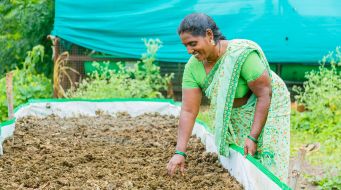
When Kumpally Paapi Reddy and his wife K Venkata Laxmi started farming on rocky wasteland in Gaddamallaiahguda, Telangana, they were met with skepticism. Despite the challenges, they transformed the land through sheer determination and innovative practices. Partnering with WOTR and HSBC in 2020, they implemented water management strategies and shifted to organic farming.
Parched villages in Karauli and Udaipur districts of Rajasthan, on the brink of despair due to water scarcity, are finding a lifeline through the “Wasundhara Gram Vikas Karykram” project, backed by the YES Foundation. This is a testament to human resilience, a story of hope blossoming amidst hardship in the harshest of landscapes.
Beneath the scorching sun of India’s vast plains, a quiet revolution is stirring. Not one fueled by the roar of tractors, but by the whisper of wind through thriving plants, the hum of a revitalised ecosystem. This silent uprising, rooted in ancestral wisdom and ecological harmony, is Natural Farming.
The resurgence of organic fertilisers is not just a trend but a necessity, a clarion call to mend the ruptured ties with nature and tread a path of sustainable and inclusive growth.
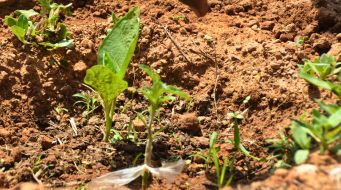
India’s agricultural sector faces challenges from conventional practices, but adopting natural farming can enhance soil quality, promote biodiversity, and improve food security while benefiting farmers economically.
Sahulia Singh’s family, once reliant on a limited diet of rice and potatoes, now grows a variety of vegetables through WOTR’s kitchen garden initiative, improving their nutrition and reducing dependence on distant markets.
Phulman Singh and Ravi Marabi transformed their barren lands into thriving farms, bringing them closer to realising their dreams of building homes for their families.
Pandarinath Shinde, a jal sevak with WOTR, helps farmers adapt to climate change by teaching efficient water management and farming practices. He has implemented techniques like micro-irrigation and soil testing on his farm, increasing his income and assisting other farmers in improving their crop yields.
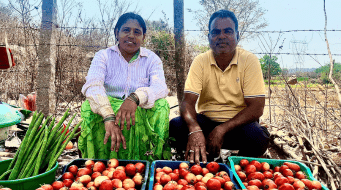
Krushiputra FPC, established in 2019, improved water conservation and farming practices in Subhanpur village, increasing crop yields by 30-40%. The FPC promotes micro-irrigation and offers resources, leading to collective profits and sustainable growth.
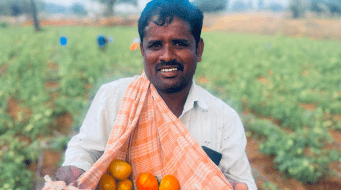
Godugu Krishna, a farmer in Telangana, transformed his 2.5-acre farm from debt-ridden to profitable through innovative water management and organic farming, supported by WOTR and HSBC. Initially reliant on rain-fed farming and struggling with high costs, Krishna adopted drip irrigation and diversified crops. This shift increased his yields and profits, allowing him to repay debts, expand into dairy production, and achieve financial stability. His success has turned skepticism into respect within his community.
When Kumpally Paapi Reddy and his wife K Venkata Laxmi started farming on rocky wasteland in Gaddamallaiahguda, Telangana, they were met with skepticism. Despite the challenges, they transformed the land through sheer determination and innovative practices. Partnering with WOTR and HSBC in 2020, they implemented water management strategies and shifted to organic farming.
Parched villages in Karauli and Udaipur districts of Rajasthan, on the brink of despair due to water scarcity, are finding a lifeline through the “Wasundhara Gram Vikas Karykram” project, backed by the YES Foundation. This is a testament to human resilience, a story of hope blossoming amidst hardship in the harshest of landscapes.
Beneath the scorching sun of India’s vast plains, a quiet revolution is stirring. Not one fueled by the roar of tractors, but by the whisper of wind through thriving plants, the hum of a revitalised ecosystem. This silent uprising, rooted in ancestral wisdom and ecological harmony, is Natural Farming.
The resurgence of organic fertilisers is not just a trend but a necessity, a clarion call to mend the ruptured ties with nature and tread a path of sustainable and inclusive growth.
By Categories
By Tags
Pastoralism has shaped India’s rangelands for centuries. Here’s why pastoralists are key to protecting biodiversity and healthy ecosystems.
Water security remains elusive in Shahapur despite heavy rains. Discover why hard rock terrain stops groundwater recharge in this Konkan story.
An analogy for climate adaptation, showing that scientific expertise alone is not enough. It reminds us that the knowledge on the ground is equally important in making informed decisions
Maharashtra village, Gosasi, transforms chronic water scarcity into year-round security through watershed structures, women-led savings groups, and sustainable farming practices.
सिलाई उद्यमी से VDC अध्यक्ष तक, मनबसिया सिंह अपने छत्तीसगढ़ के गाँव को बेहतर भविष्य की ओर अग्रसर कर रही हैं।
From tailoring entrepreneur to VDC Chairman, Manbasiya Singh is leading her village in Chhattisgarh towards a better future.
A tribute to World Nature Conservation Day, where we are reminded that conservation must extend beyond conventional models.
A story of how water stewardship empowered Bhagwat Gavande to become a trusted rural resource leader in his village