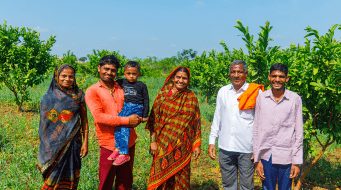
Yavatmal district of Maharashtra has numerous such heartbreaking stories. Women, after the death of their husbands, are left in the lurch. Chanda and her sister-in-law Ramkala live in Baradgaon village and could survive on a meager income of
A Better Tomorrow
Stories, Practices, and Solutions
Heerabai still feels chills running down her spine when she thinks of the water scarcity and parched lands that her village Purushwadi was known for. The unseasonal and irregular rainfall, fragmented landholding were the major challenges in the area
The world came crashing down for Kamalakola when she lost her husband to malaria. “He worked in a textile mill in Surat. His income was huge support for the family,” said Kamalakola Nayak, resident of Luduludi village in Ganjam district of Odisha.
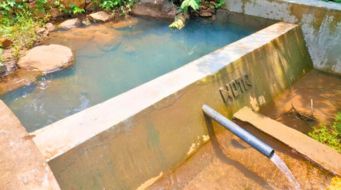
Drinking water availability was always a challenge in the village Modwa, in Udaipur district of Rajasthan. The only source of potable water was the old well in the village. Years of poor maintenance of this well had made its boundary walls crumble
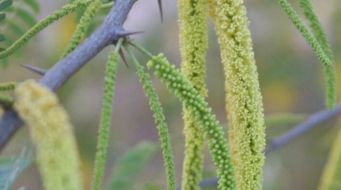
Until about five years back cotton, paddy and red gram were considered the only profitable crops by the farmers of Kamsanpally village in Damargidda Mandal, Narayanpet district of Telangana. Water scarcity and extreme climatic conditions
For years, Ramnarayan Meena had been only limited to millets, paddy and wheat from his 9 bigha land. The limited water for irrigation left him with not many options. The income was meagre, just adequate to run his family.
According to the HUNGaMA (Hunger and Malnutrition) Survey, almost one in every five children in 112 districts of India is at risk of malnutrition. Rayagada in Odisha is one such district that is majorly occupied by the Khonds and Lanjia Soras tribes.
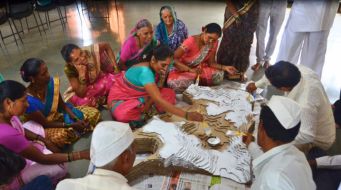
Making dona-pattal (dishes) out of tree leaves is a common activity for several tribal villages in Madhya Pradesh. Women are often seen doing this activity which is not only eco-friendly but also a source of income generation for many families.
Three years back when Meena suggested replacing chemical fertilizers with vermicompost, she was ridiculed and strongly opposed. “My husband and son were not at all convinced to use organic manure. For them, it was a huge risk and could lead to losses,” said Meena Atmaram Hazare
Santosh Salve was on cloud nine when WOTR began its work in the Ambad block of Jalna district in Maharashtra. As WOTR started working with the local community to promote climate-resilient agriculture, Santosh approached the team with a specific interest – building a low-cost setup to prepare vermicompost.
Yavatmal district of Maharashtra has numerous such heartbreaking stories. Women, after the death of their husbands, are left in the lurch. Chanda and her sister-in-law Ramkala live in Baradgaon village and could survive on a meager income of
Heerabai still feels chills running down her spine when she thinks of the water scarcity and parched lands that her village Purushwadi was known for. The unseasonal and irregular rainfall, fragmented landholding were the major challenges in the area
The world came crashing down for Kamalakola when she lost her husband to malaria. “He worked in a textile mill in Surat. His income was huge support for the family,” said Kamalakola Nayak, resident of Luduludi village in Ganjam district of Odisha.
Drinking water availability was always a challenge in the village Modwa, in Udaipur district of Rajasthan. The only source of potable water was the old well in the village. Years of poor maintenance of this well had made its boundary walls crumble
Until about five years back cotton, paddy and red gram were considered the only profitable crops by the farmers of Kamsanpally village in Damargidda Mandal, Narayanpet district of Telangana. Water scarcity and extreme climatic conditions
For years, Ramnarayan Meena had been only limited to millets, paddy and wheat from his 9 bigha land. The limited water for irrigation left him with not many options. The income was meagre, just adequate to run his family.
According to the HUNGaMA (Hunger and Malnutrition) Survey, almost one in every five children in 112 districts of India is at risk of malnutrition. Rayagada in Odisha is one such district that is majorly occupied by the Khonds and Lanjia Soras tribes.
Making dona-pattal (dishes) out of tree leaves is a common activity for several tribal villages in Madhya Pradesh. Women are often seen doing this activity which is not only eco-friendly but also a source of income generation for many families.
Three years back when Meena suggested replacing chemical fertilizers with vermicompost, she was ridiculed and strongly opposed. “My husband and son were not at all convinced to use organic manure. For them, it was a huge risk and could lead to losses,” said Meena Atmaram Hazare
Santosh Salve was on cloud nine when WOTR began its work in the Ambad block of Jalna district in Maharashtra. As WOTR started working with the local community to promote climate-resilient agriculture, Santosh approached the team with a specific interest – building a low-cost setup to prepare vermicompost.
By Categories
By Tags
Indigenous food systems sustain generations through women’s forest knowledge, biodiversity, and seasonal wisdom—now threatened by climate change. Discover their resilience.
Pastoralism has shaped India’s rangelands for centuries. Here’s why pastoralists are key to protecting biodiversity and healthy ecosystems.
Water security remains elusive in Shahapur despite heavy rains. Discover why hard rock terrain stops groundwater recharge in this Konkan story.
An analogy for climate adaptation, showing that scientific expertise alone is not enough. It reminds us that the knowledge on the ground is equally important in making informed decisions
Maharashtra village, Gosasi, transforms chronic water scarcity into year-round security through watershed structures, women-led savings groups, and sustainable farming practices.
सिलाई उद्यमी से VDC अध्यक्ष तक, मनबसिया सिंह अपने छत्तीसगढ़ के गाँव को बेहतर भविष्य की ओर अग्रसर कर रही हैं।
From tailoring entrepreneur to VDC Chairman, Manbasiya Singh is leading her village in Chhattisgarh towards a better future.
A tribute to World Nature Conservation Day, where we are reminded that conservation must extend beyond conventional models.