The idea that pollution increases early in development but later decreases as countries get richer and adopt cleaner technologies—as suggested by the Environmental Kuznets Curve—doesn’t hold in reality, where the damage is often lasting and hard to reverse.
A Better Tomorrow
Stories, Practices, and Solutions
As Earth Day 2025 prompts global reflection on sustainability, biodiversity, and climate action, it is an opportunity to examine the intersections between environmental conservation and development in India.
Cooling demands are increasing with extreme heat, but are we meeting our cooling needs responsibly? Uncover the complete story.
At its heart, CSA is about transforming agricultural systems to respond effectively to climate variability and change.
India is also home to a multitude of Indigenous Peoples and Local Communities (IPLCs), each with unique ethical, cultural, and traditional practices. For centuries, these communities have harnessed their Traditional Ecological Knowledge (TEK) to sustain their livelihoods and preserve their cultural identities.
The crescent bund is one of the most effective in-situ soil and water moisture conservation methods used in cashew plantations
This blog post is based on a unique multilayer farming initiative implemented as part of the “Integrated Water Resources Development and Promotion of Ecosystem-based Adaptation (EbA) in Maharashtra and Telangana—A Practice and Knowledge Embedded Approach” project, which is supported by the Honeywell Hometown Solutions India Foundation (HHSIF).
As climate change tightens its grip, the resilient communities in Chhattisgarh need your support more than ever
As Axis Bank Foundation strives to improve the livelihoods of two million households by 2026-27, one of the intensifying and worrying hurdles our communities face is the disproportionate impact of climate change. Climate adaptation is, hence, an urgency!
Carbon footprint is the total amount of greenhouse gases (including carbon dioxide and methane) that are generated by human actions. By making small changes to our daily actions, one can decrease their carbon footprint.
The idea that pollution increases early in development but later decreases as countries get richer and adopt cleaner technologies—as suggested by the Environmental Kuznets Curve—doesn’t hold in reality, where the damage is often lasting and hard to reverse.
As Earth Day 2025 prompts global reflection on sustainability, biodiversity, and climate action, it is an opportunity to examine the intersections between environmental conservation and development in India.
Cooling demands are increasing with extreme heat, but are we meeting our cooling needs responsibly? Uncover the complete story.
At its heart, CSA is about transforming agricultural systems to respond effectively to climate variability and change.
India is also home to a multitude of Indigenous Peoples and Local Communities (IPLCs), each with unique ethical, cultural, and traditional practices. For centuries, these communities have harnessed their Traditional Ecological Knowledge (TEK) to sustain their livelihoods and preserve their cultural identities.
The crescent bund is one of the most effective in-situ soil and water moisture conservation methods used in cashew plantations
This blog post is based on a unique multilayer farming initiative implemented as part of the “Integrated Water Resources Development and Promotion of Ecosystem-based Adaptation (EbA) in Maharashtra and Telangana—A Practice and Knowledge Embedded Approach” project, which is supported by the Honeywell Hometown Solutions India Foundation (HHSIF).
As climate change tightens its grip, the resilient communities in Chhattisgarh need your support more than ever
As Axis Bank Foundation strives to improve the livelihoods of two million households by 2026-27, one of the intensifying and worrying hurdles our communities face is the disproportionate impact of climate change. Climate adaptation is, hence, an urgency!
Carbon footprint is the total amount of greenhouse gases (including carbon dioxide and methane) that are generated by human actions. By making small changes to our daily actions, one can decrease their carbon footprint.
By Categories
By Tags
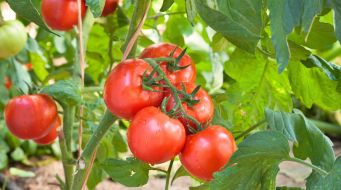
Fruit and vegetable farming helps Chhattisgarh farmers earn more, adopt organic methods, and build climate-resilient, diversified agricultural livelihoods.
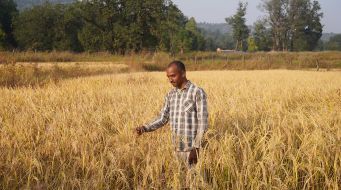
How community-Led Irrigation helped Ramgarh farmers secure year-round water, increase crop diversity, strengthen livelihoods, and inspire collective action.
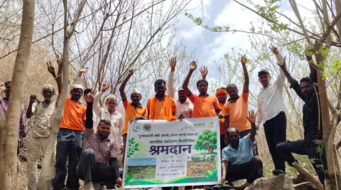
619 residents from 45 villages villages came together for World Environment Day to build water capacities in an El Niño Year.
El Niño is often blamed for weak monsoons and droughts. Discover how it really influences India’s rainfall, agriculture, water security, and resilience.
Global Forest Goals Report 2026 reveals critical gaps in forest conservation, financing, and livelihoods, highlighting urgent action before 2030.
Climate adaptation needs collective action. ECOBARI unites ecosystems, livelihoods, and communities to build nature-based resilience across rural India.
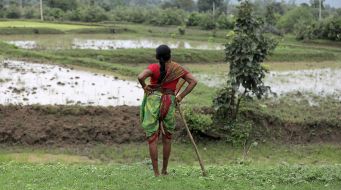
Climate Resilience is possible when people work with nature. Learn how wetlands, forests, renewable energy, and communities are shaping a sustainable future.
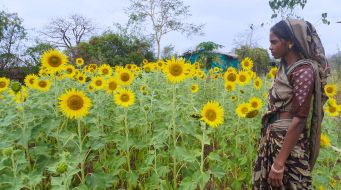
A glimpse of the Rabi harvest season from Chhattisgarh, featuring freshly harvest wheat and sunflowers from villages of Kolhuva, Temri etc.