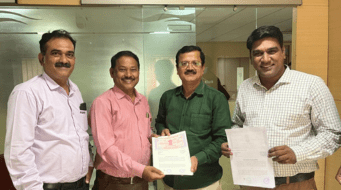
Pandarinath Shinde, a jal sevak with WOTR, helps farmers adapt to climate change by teaching efficient water management and farming practices. He has implemented techniques like micro-irrigation and soil testing on his farm, increasing his income and assisting other farmers in improving their crop yields.
A Better Tomorrow
Stories, Practices, and Solutions
Krushiputra FPC, established in 2019, improved water conservation and farming practices in Subhanpur village, increasing crop yields by 30-40%. The FPC promotes micro-irrigation and offers resources, leading to collective profits and sustainable growth.
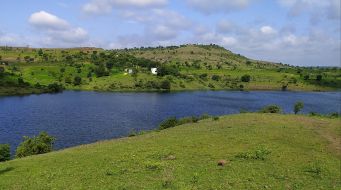
Maharashtra, leads in implementing water harvesting initiatives, with over 99% of its 97,062 water bodies being artificial. W-CReS collaborated with ATE Chandra Foundation to assess the impact of rejuvenation of water bodies five years after implementation.
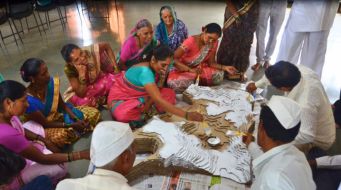
Borgaon Budruk’s Village Development Committee (VDC) and Village Water Management Teams (VWMT) have successfully addressed water scarcity through community-driven water conservation efforts, significantly improving local conditions.
Shyam Motiram Jadhav and his wife, Vaishali Jadhav, have successfully increased their farm’s productivity and earnings by using a sprinkler system to grow brinjals, which require less water and yield higher profits compared to maize.
The village of Borgaon Math relied on one hand pump, leading to shortages and conflicts. Bhagirathi, a farmer, often traveled long distances for water, impacting daily life and her children’s education .WOTR’s efforts have provided reliable water access, improving living conditions and education.

In rural Maharashtra, communities have become water stewards with support from WOTR. Villages like Borgaon Math and Bori Khurd have adopted rainwater harvesting, micro-irrigation, and organic farming, boosting water availability and crop yields.
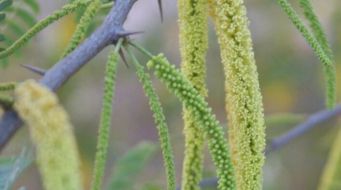
Prosopis juliflora, or Vilayati Kikar, sparks debate for its dual impact on arid and semi-arid landscapes. This invasive species provides valuable ecosystem services (ES) while also causing significant ecosystem disservices (EDS).
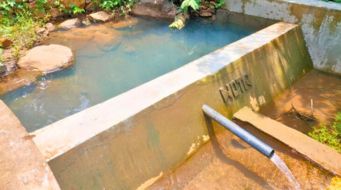
Diversion-Based Irrigation (DBI) merges ancient practices with modern technology, using gravity and slope to water crops without external energy. Understanding site conditions is crucial for successful DBI implementation, supporting sustainable agriculture.
WOTR has entered into a partnership with FIPL to empower farming communities in Maharashtra. Through this partnership, FIPL will create awareness of their product portfolio whereas WOTR will advise FPOs in procuring suitable agricultural inputs after assessing the offerings and needs.
Pandarinath Shinde, a jal sevak with WOTR, helps farmers adapt to climate change by teaching efficient water management and farming practices. He has implemented techniques like micro-irrigation and soil testing on his farm, increasing his income and assisting other farmers in improving their crop yields.
Krushiputra FPC, established in 2019, improved water conservation and farming practices in Subhanpur village, increasing crop yields by 30-40%. The FPC promotes micro-irrigation and offers resources, leading to collective profits and sustainable growth.
Maharashtra, leads in implementing water harvesting initiatives, with over 99% of its 97,062 water bodies being artificial. W-CReS collaborated with ATE Chandra Foundation to assess the impact of rejuvenation of water bodies five years after implementation.
Borgaon Budruk’s Village Development Committee (VDC) and Village Water Management Teams (VWMT) have successfully addressed water scarcity through community-driven water conservation efforts, significantly improving local conditions.
Shyam Motiram Jadhav and his wife, Vaishali Jadhav, have successfully increased their farm’s productivity and earnings by using a sprinkler system to grow brinjals, which require less water and yield higher profits compared to maize.
The village of Borgaon Math relied on one hand pump, leading to shortages and conflicts. Bhagirathi, a farmer, often traveled long distances for water, impacting daily life and her children’s education .WOTR’s efforts have provided reliable water access, improving living conditions and education.
In rural Maharashtra, communities have become water stewards with support from WOTR. Villages like Borgaon Math and Bori Khurd have adopted rainwater harvesting, micro-irrigation, and organic farming, boosting water availability and crop yields.
Prosopis juliflora, or Vilayati Kikar, sparks debate for its dual impact on arid and semi-arid landscapes. This invasive species provides valuable ecosystem services (ES) while also causing significant ecosystem disservices (EDS).
Diversion-Based Irrigation (DBI) merges ancient practices with modern technology, using gravity and slope to water crops without external energy. Understanding site conditions is crucial for successful DBI implementation, supporting sustainable agriculture.
WOTR has entered into a partnership with FIPL to empower farming communities in Maharashtra. Through this partnership, FIPL will create awareness of their product portfolio whereas WOTR will advise FPOs in procuring suitable agricultural inputs after assessing the offerings and needs.
By Categories
By Tags
In Odisha’s Gajapati and Rayagada districts, where water scarcity and erratic rainfall have long posed challenges, the Watershed Organisation Trust (WOTR) implemented a transformative climate resilience project, supported by Andheri Hilfe.
This case study highlights the journey of Eta Bai Rathod from Kangti Mandal, in Sangareddy district, exemplifying how targeted interventions can improve livelihoods through sustainable agricultural practices. Eta Bai’s story illustrates the convergence of water management, crop diversification, and institutional support—strategies critical for addressing India’s agrarian challenges.
In the quest for rural communities to overcome water scarcity and build a resilient future, determination, collaboration, and the right support are essential. For the villages of Phalode and Sawarli, Pimpari in Maharashtra this journey began with a clear vision and collective action.
As we celebrate Women’s Day throughout March, we’re honored to share inspiring stories of women who embody grit, resilience, and determination.
Within a small place, Singaram Budhundu from Telangana and his family members manage a small kitchen garden which provides his family with a steady stream of fruits and vegetables, adds to their nutrition and also boosts the family income
With every shared pot of water, with every community meeting, with every onion harvested, Chaaya weaves a future for Mendhwan where water is a source of life, not a struggle for it.
Bireng Soy overcame obstacles to forge a path toward independence and empowerment.
The community shares firsthand experiences of resilience, innovation, and growth with WOTR