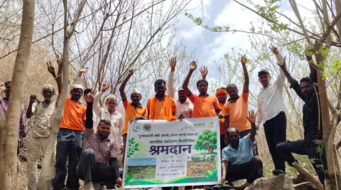
Over 264 villages competed in the Dharashiv Water Competition, who were judged on the basis of the Water Governance Standard.
A Better Tomorrow
Stories, Practices, and Solutions
In this reflective piece, Crispino Lobo, Co-founder of WOTR, explores a fundamental truth often overlooked in development work: change rarely begins by choice. It happens when people are left with no other option.
Watershed Organisation Trust along with its esteemed partners is implementing solar-powered solutions to ensure drinking water supply, irrigate farmlands and light the streets in rural areas of Chhattisgarh.
The title ‘Mahila Pravartak’ may sound official, but it captures something far more powerful: a woman changemaker. These women are the backbone of WOTR’s community health efforts—moving door-to-door, to bring real transformation to the communities they serve.
For Saroj Devi, multilayer farming marked a turning point in her farming career, ultimately providing a stable and diverse source of food for her family and the community.
Water stewardship is a step beyond good water governance that not only ensures quality management and distribution of water, but also builds climate resilient communities.
This blog post delves into a comprehensive report, “A Comparative Study of the Water Footprint and Economics of Cashew Cultivation and its Alternatives in Odisha,” which explores the complexities of cashew farming in the eastern Indian state of Odisha.
FarmPrecise app developed by WOTR is a comprehensive, data-driven tool designed to support informed decision-making in agriculture.
WOTR’s approach has always been collaborative, working with partners across disciplines, ensuring community-led solutions.
This case study highlights the journey of Eta Bai Rathod from Kangti Mandal, in Sangareddy district, exemplifying how targeted interventions can improve livelihoods through sustainable agricultural practices. Eta Bai’s story illustrates the convergence of water management, crop diversification, and institutional support—strategies critical for addressing India’s agrarian challenges.
Over 264 villages competed in the Dharashiv Water Competition, who were judged on the basis of the Water Governance Standard.
In this reflective piece, Crispino Lobo, Co-founder of WOTR, explores a fundamental truth often overlooked in development work: change rarely begins by choice. It happens when people are left with no other option.
Watershed Organisation Trust along with its esteemed partners is implementing solar-powered solutions to ensure drinking water supply, irrigate farmlands and light the streets in rural areas of Chhattisgarh.
The title ‘Mahila Pravartak’ may sound official, but it captures something far more powerful: a woman changemaker. These women are the backbone of WOTR’s community health efforts—moving door-to-door, to bring real transformation to the communities they serve.
For Saroj Devi, multilayer farming marked a turning point in her farming career, ultimately providing a stable and diverse source of food for her family and the community.
Water stewardship is a step beyond good water governance that not only ensures quality management and distribution of water, but also builds climate resilient communities.
This blog post delves into a comprehensive report, “A Comparative Study of the Water Footprint and Economics of Cashew Cultivation and its Alternatives in Odisha,” which explores the complexities of cashew farming in the eastern Indian state of Odisha.
FarmPrecise app developed by WOTR is a comprehensive, data-driven tool designed to support informed decision-making in agriculture.
WOTR’s approach has always been collaborative, working with partners across disciplines, ensuring community-led solutions.
This case study highlights the journey of Eta Bai Rathod from Kangti Mandal, in Sangareddy district, exemplifying how targeted interventions can improve livelihoods through sustainable agricultural practices. Eta Bai’s story illustrates the convergence of water management, crop diversification, and institutional support—strategies critical for addressing India’s agrarian challenges.
By Categories
By Tags
Fruit and vegetable farming helps Chhattisgarh farmers earn more, adopt organic methods, and build climate-resilient, diversified agricultural livelihoods.
How community-Led Irrigation helped Ramgarh farmers secure year-round water, increase crop diversity, strengthen livelihoods, and inspire collective action.
619 residents from 45 villages villages came together for World Environment Day to build water capacities in an El Niño Year.
El Niño is often blamed for weak monsoons and droughts. Discover how it really influences India’s rainfall, agriculture, water security, and resilience.
Global Forest Goals Report 2026 reveals critical gaps in forest conservation, financing, and livelihoods, highlighting urgent action before 2030.
Climate adaptation needs collective action. ECOBARI unites ecosystems, livelihoods, and communities to build nature-based resilience across rural India.
Climate Resilience is possible when people work with nature. Learn how wetlands, forests, renewable energy, and communities are shaping a sustainable future.
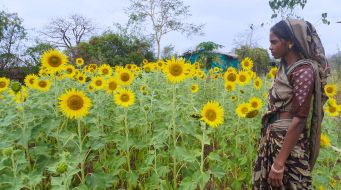
A glimpse of the Rabi harvest season from Chhattisgarh, featuring freshly harvest wheat and sunflowers from villages of Kolhuva, Temri etc.