The idea that pollution increases early in development but later decreases as countries get richer and adopt cleaner technologies—as suggested by the Environmental Kuznets Curve—doesn’t hold in reality, where the damage is often lasting and hard to reverse.
Since 2019, WOTR and the Rotary Club of Poona have helped Dhamanvan and Shirpunje in Akole, Maharashtra, build resilience through community-driven initiatives.
Odisha’s geothermal landscape holds immense potential, with untapped resources and exciting future prospects. Various initiatives are underway to explore and harness this energy, paving the way for sustainable development in the region.
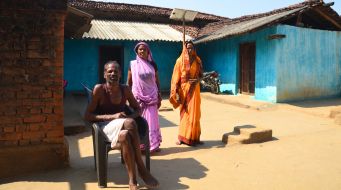
Sahulia Singh’s family, once reliant on a limited diet of rice and potatoes, now grows a variety of vegetables through WOTR’s kitchen garden initiative, improving their nutrition and reducing dependence on distant markets.
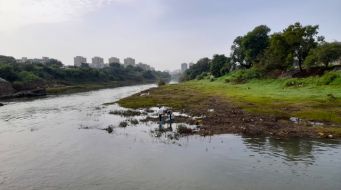
Urbanization and water scarcity are escalating challenges, but often overlooked, urban wetlands, offer crucial solutions. These vibrant ecosystems, found within or near cities, provide vital environmental benefits.
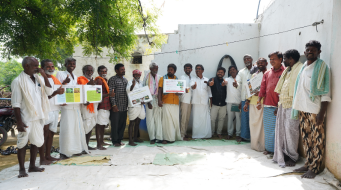
Located in a rain-fed area with limited water availability, residents say farming in Bhaironkonda has become particularly precarious in the last few years, owing to changing climatic conditions, and increasing costs of agriculture. Distressed, and desperate for solutions, some farmers started participating in Farmer Field Schools (FFS) organised by WOTR in 2019, as part of Axis Bank Foundation’s Sustainable Livelihoods Programme.
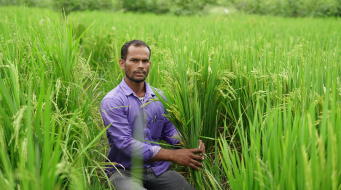
Paddy is the staple food for the majority of Narayanpet’s population and is grown in these parts extensively. Its cultivation has always been traditional, with farmers flooding the fields to grow it. Given the severe land and water constraints, WOTR decided to promote System of Rice Intensification (SRI) and System of Crop Intensification (SCI) amongst farmers under Axis Bank Foundation’s Sustainable Livelihoods Programme.
If you’re able to fill your bottle with clean drinking water at any given time of the day, clearly you are not amongst the 163 million Indians with no access to this privilege. India is one of the most water-stressed countries in the world
Plankton, specifically cyanobacteria (a type of phytoplankton), are the pioneers of photosynthesis on Earth. Yet, when we think of aquatic life, our minds often jump to fish, birds, crabs, and plants. Rarely do we give a thought to plankton, the
The idea that pollution increases early in development but later decreases as countries get richer and adopt cleaner technologies—as suggested by the Environmental Kuznets Curve—doesn’t hold in reality, where the damage is often lasting and hard to reverse.
Since 2019, WOTR and the Rotary Club of Poona have helped Dhamanvan and Shirpunje in Akole, Maharashtra, build resilience through community-driven initiatives.
Odisha’s geothermal landscape holds immense potential, with untapped resources and exciting future prospects. Various initiatives are underway to explore and harness this energy, paving the way for sustainable development in the region.
Sahulia Singh’s family, once reliant on a limited diet of rice and potatoes, now grows a variety of vegetables through WOTR’s kitchen garden initiative, improving their nutrition and reducing dependence on distant markets.
Urbanization and water scarcity are escalating challenges, but often overlooked, urban wetlands, offer crucial solutions. These vibrant ecosystems, found within or near cities, provide vital environmental benefits.
Located in a rain-fed area with limited water availability, residents say farming in Bhaironkonda has become particularly precarious in the last few years, owing to changing climatic conditions, and increasing costs of agriculture. Distressed, and desperate for solutions, some farmers started participating in Farmer Field Schools (FFS) organised by WOTR in 2019, as part of Axis Bank Foundation’s Sustainable Livelihoods Programme.
Paddy is the staple food for the majority of Narayanpet’s population and is grown in these parts extensively. Its cultivation has always been traditional, with farmers flooding the fields to grow it. Given the severe land and water constraints, WOTR decided to promote System of Rice Intensification (SRI) and System of Crop Intensification (SCI) amongst farmers under Axis Bank Foundation’s Sustainable Livelihoods Programme.
If you’re able to fill your bottle with clean drinking water at any given time of the day, clearly you are not amongst the 163 million Indians with no access to this privilege. India is one of the most water-stressed countries in the world
Plankton, specifically cyanobacteria (a type of phytoplankton), are the pioneers of photosynthesis on Earth. Yet, when we think of aquatic life, our minds often jump to fish, birds, crabs, and plants. Rarely do we give a thought to plankton, the
Indigenous food systems sustain generations through women’s forest knowledge, biodiversity, and seasonal wisdom—now threatened by climate change. Discover their resilience.