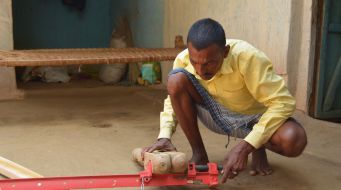
A family in Odisha rebuilds their lives after a tragic accident, using community support to start a small shop that restores their livelihood, dignity, and hope.
A Better Tomorrow
Stories, Practices, and Solutions
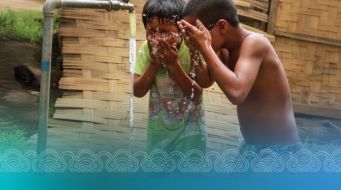
The pulveriser provides a reliable source of income, and with better access to water, Babulal’s farmland holds new possibilities.
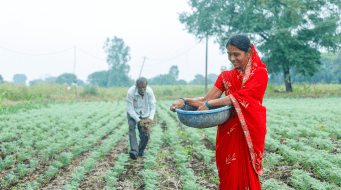
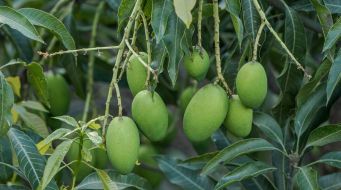
The Ekka family’s income has increased by at least 20 percent since they decided to plant mango saplings, interspersed with seasonal vegetables.
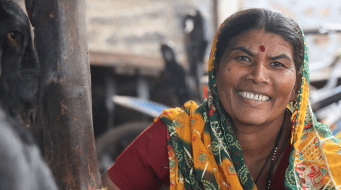
For Saroj Devi, multilayer farming marked a turning point in her farming career, ultimately providing a stable and diverse source of food for her family and the community.
By combining scientific watershed management with local knowledge, WOTR introduced practical solutions to enhance water availability and livelihoods.
In Odisha’s Gajapati and Rayagada districts, where water scarcity and erratic rainfall have long posed challenges, the Watershed Organisation Trust (WOTR) implemented a transformative climate resilience project, supported by Andheri Hilfe.
This case study highlights the journey of Eta Bai Rathod from Kangti Mandal, in Sangareddy district, exemplifying how targeted interventions can improve livelihoods through sustainable agricultural practices. Eta Bai’s story illustrates the convergence of water management, crop diversification, and institutional support—strategies critical for addressing India’s agrarian challenges.
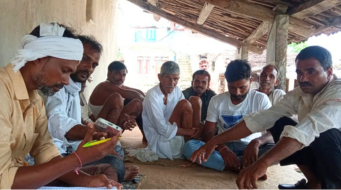
Suraj Lal turned his carpentry passion into a business, crafting furniture for his village with WOTR and AHB’s support. Similarly, Bir Singh and his team in Dungripara built a successful construction enterprise, creating a path to self-sufficiency.
Sunita Jadhav from Bhandar Kumtha village, once struggling with daily wages, found new hope through goat rearing with support from Wells Fargo and WOTR. This venture provided her family financial stability, allowing her to earn a significant income and construct a shed for the goats’ safety.
In Kherda village, Vijaykumar and Sagarbai Kundgir exemplify resilience, transforming their small farm through vermicomposting to boost yields and earnings, while ensuring their children receive a quality education. Supported by Wells Fargo and WOTR, they increased their soybean yield and profits significantly.
A family in Odisha rebuilds their lives after a tragic accident, using community support to start a small shop that restores their livelihood, dignity, and hope.
The pulveriser provides a reliable source of income, and with better access to water, Babulal’s farmland holds new possibilities.
The Ekka family’s income has increased by at least 20 percent since they decided to plant mango saplings, interspersed with seasonal vegetables.
For Saroj Devi, multilayer farming marked a turning point in her farming career, ultimately providing a stable and diverse source of food for her family and the community.
By combining scientific watershed management with local knowledge, WOTR introduced practical solutions to enhance water availability and livelihoods.
In Odisha’s Gajapati and Rayagada districts, where water scarcity and erratic rainfall have long posed challenges, the Watershed Organisation Trust (WOTR) implemented a transformative climate resilience project, supported by Andheri Hilfe.
This case study highlights the journey of Eta Bai Rathod from Kangti Mandal, in Sangareddy district, exemplifying how targeted interventions can improve livelihoods through sustainable agricultural practices. Eta Bai’s story illustrates the convergence of water management, crop diversification, and institutional support—strategies critical for addressing India’s agrarian challenges.
Suraj Lal turned his carpentry passion into a business, crafting furniture for his village with WOTR and AHB’s support. Similarly, Bir Singh and his team in Dungripara built a successful construction enterprise, creating a path to self-sufficiency.
Sunita Jadhav from Bhandar Kumtha village, once struggling with daily wages, found new hope through goat rearing with support from Wells Fargo and WOTR. This venture provided her family financial stability, allowing her to earn a significant income and construct a shed for the goats’ safety.
In Kherda village, Vijaykumar and Sagarbai Kundgir exemplify resilience, transforming their small farm through vermicomposting to boost yields and earnings, while ensuring their children receive a quality education. Supported by Wells Fargo and WOTR, they increased their soybean yield and profits significantly.
By Categories
By Tags
From aspiring government teacher to community leader, Mahaveer journey shows how community mobilisation, leadership and collective action can transform rural development in Rajasthan.
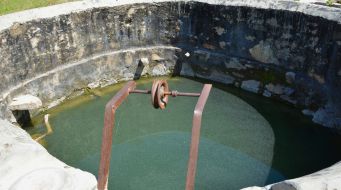
Group irrigation wells reveal how shared water resources can strengthen livelihoods, support year-round farming, and prepare for climate uncertainty.
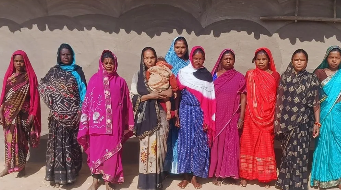
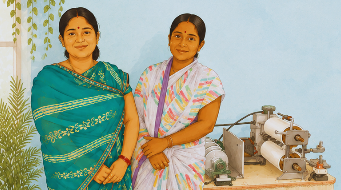
It is a small enterprise, still finding its feet. But its beginnings are firmly local, shaped by what the women know, what the farmers need and what the village already has.
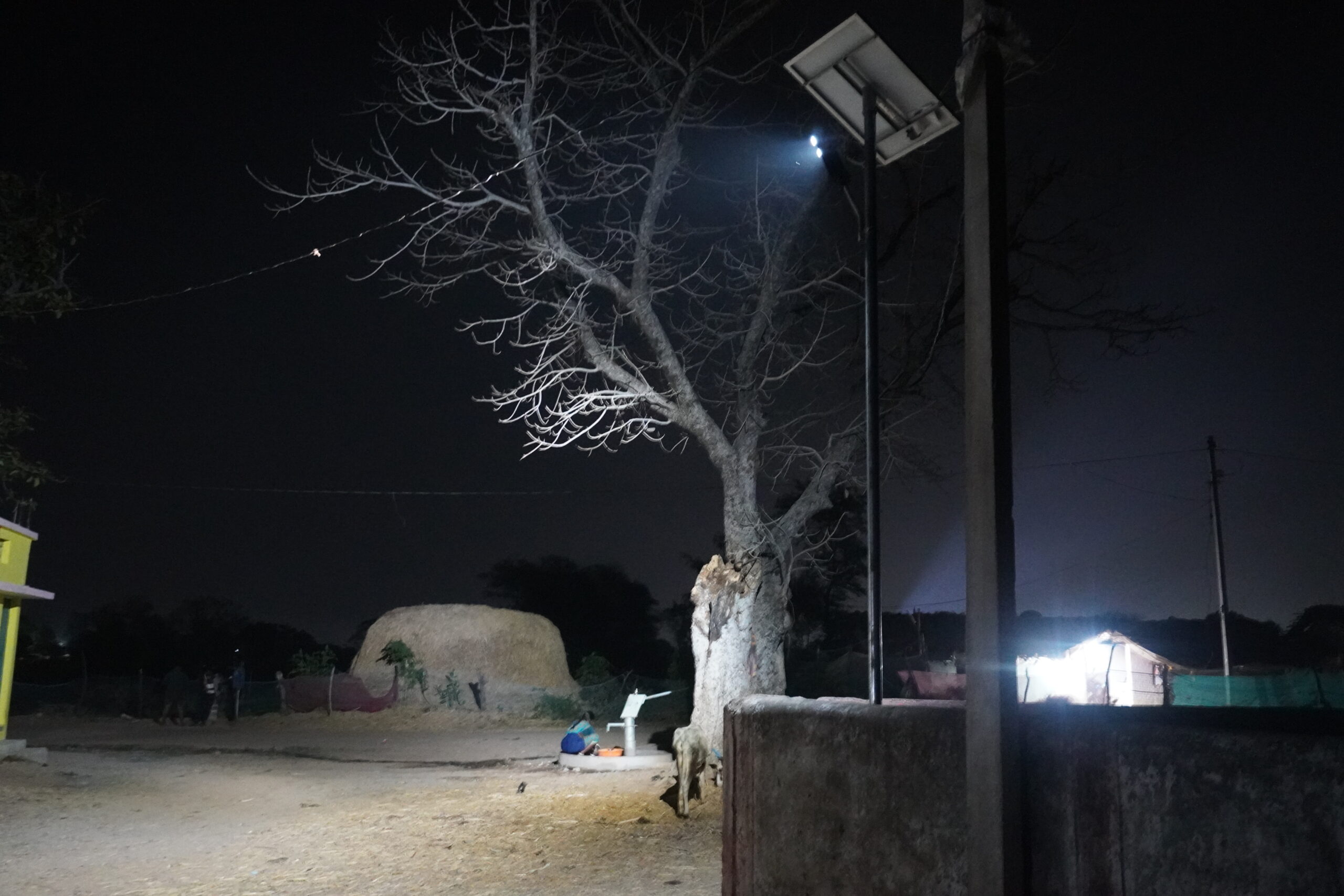
Bringing light, safety, and renewed community life to 20 villages in Kabirdham through 150 solar streetlights, empowering communities to reclaim their public spaces.
How planning and implementation of ecosystem-based adaptation (EbA) and agroecology principles in arid or semi-arid regions can help address the growing impacts of climate change.
Two mothers in drought-hit Marathwada built a papad enterprise with WOTR and Standard Chartered Bank, paying school fees for their children.
COP17 put a simple question to the world’s drought experts: can lost land be restored? WOTR’s watersheds may hold the answer.
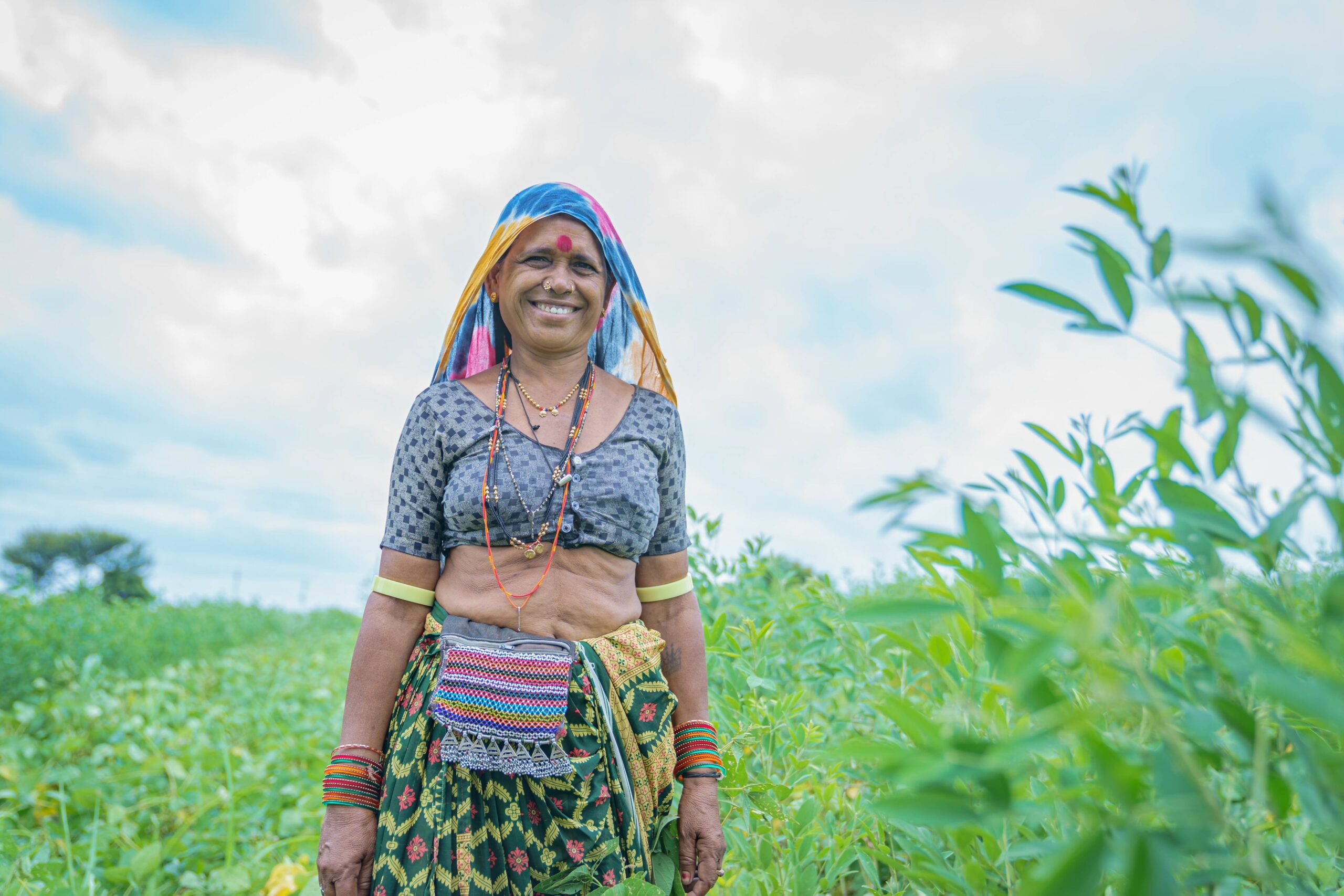
Mango orchards are improving rural livelihoods in Chhattisgarh, creating resilient farms, diverse incomes, and long-term opportunities for farming communities.