A Better Tomorrow

Stories, Practices, and Solutions

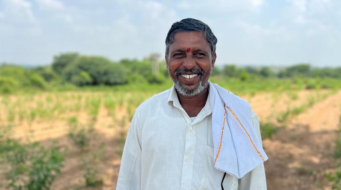
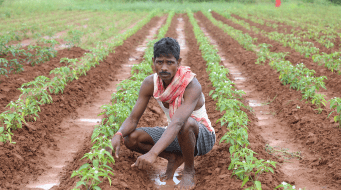
Rajesh Mahto, 40, is always looking for money he can save or money he can make. Until 2019, Mahto used to ride an autorickshaw. Having all but quit agriculture, the 2019 lockdown imposed due to Covid-19 forced Mahto to give farming a second shot. He was aided in his efforts by WOTR which provided seeds, irrigation inputs, and advice on farming, through Axis Bank Foundation’s Sustainable Livelihoods Programme.
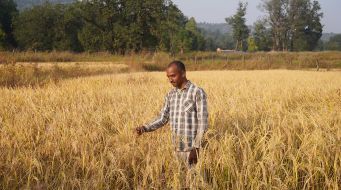
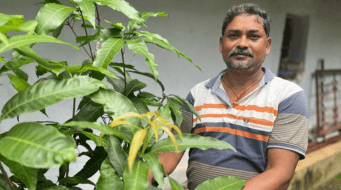
Narendra Adhikari, 58, is not afraid of experimentation. Agriculture fascinates him, and he says he is always looking to learn new approaches to growing food. His 1 acre vegetable garden – where Adhikari presently grows at least 25-30 varieties of herbs, fruits and vegetables – is a testament to this approach. Around 2019, he came in touch with WOTR, and started attending training sessions and going on exposure visits held by the organisation, under Axis Bank’s Sustainable Livelihoods Programme.
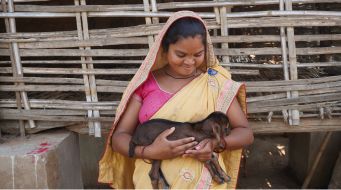
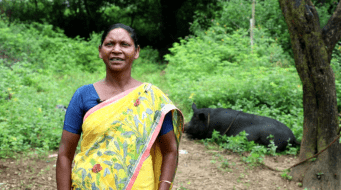
Pig farming is considered an integral part of life amongst the tribal population in Jharkhand, and many households practice backyard piggery with one or two pigs. Bahamani Purty, 45, lives in Otongora village, in Khunti, Jharkhand with her husband Marshall, and had been rearing pigs for a few years. In 2019, while attending a gram sabha meeting, Purty learnt that pig rearing was being promoted as an intervention under Axis Bank Foundation’s Sustainable Livelihoods Programme.
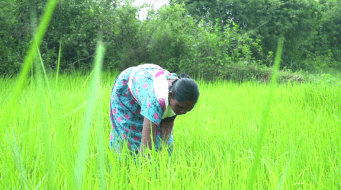
Paulina Mundu, a 40-year-old farmer in Khunti, Jharkhand, fulfilled her childhood dream of farming upon returning home. However, water scarcity posed a challenge, leading her to construct a farm pond under MGNREGA in 2017. Despite initial limitations, assistance from Axis Bank Foundation and WOTR in 2019 enabled Paulina to expand and improve the pond, enhancing irrigation capacity.
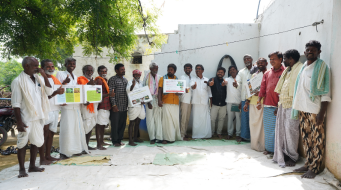
Located in a rain-fed area with limited water availability, residents say farming in Bhaironkonda has become particularly precarious in the last few years, owing to changing climatic conditions, and increasing costs of agriculture. Distressed, and desperate for solutions, some farmers started participating in Farmer Field Schools (FFS) organised by WOTR in 2019, as part of Axis Bank Foundation’s Sustainable Livelihoods Programme.
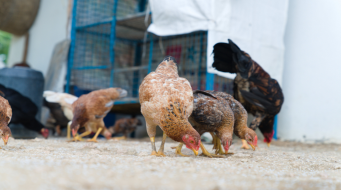
A large majority of the families in Narayanpet, Telangana are either wage labourers or small and marginal farmers who own less than 1Ha. of land. They have meagre incomes, limited access to resources, and no additional skill or financial support available to generate an alternate income. Keeping these factors in mind, the families were given support with backyard poultry farming.
Kavili Bal Reddy, a farmer from Appireddipally in Narayanpet mandal owns 7.5 acres of land on which he has been growing paddy in both Kharif and Rabi season for decades. That’s when Reddy decided to do something different. As part of the Farmer Field School (FFS) organised by WOTR under the Axis Bank Foundation’s Sustainable Livelihoods Programme, Reddy learnt about the concept of cultivating Green Manure Crops (GMCs).
Bingi Ramulu, a 52-year-old farmer from Ammireddipally village in Narayanpet, had lost hope in his eleven-acre rainfed plot ever turning a profit. Determined for solutions, he joined one of the 15 Farmer Field Schools (FFSs) in Ammireddipally, part of the Axis Bank Foundation’s Sustainable Livelihoods Programme, run by WOTR.
Women in every corner of the world face a relentless barrage of obstacles: unequal pay, limited access to opportunities, and the constant threat of violence and discrimination. In rural communities, these burdens are often magnified, stifling women’s potential and trapping them in cycles of poverty and oppression. This blog unveils the powerful stories of women from rural Maharashtra who shattered these cycles of hardship and patriarchy.
Rajesh Mahto, 40, is always looking for money he can save or money he can make. Until 2019, Mahto used to ride an autorickshaw. Having all but quit agriculture, the 2019 lockdown imposed due to Covid-19 forced Mahto to give farming a second shot. He was aided in his efforts by WOTR which provided seeds, irrigation inputs, and advice on farming, through Axis Bank Foundation’s Sustainable Livelihoods Programme.
Narendra Adhikari, 58, is not afraid of experimentation. Agriculture fascinates him, and he says he is always looking to learn new approaches to growing food. His 1 acre vegetable garden – where Adhikari presently grows at least 25-30 varieties of herbs, fruits and vegetables – is a testament to this approach. Around 2019, he came in touch with WOTR, and started attending training sessions and going on exposure visits held by the organisation, under Axis Bank’s Sustainable Livelihoods Programme.
Pig farming is considered an integral part of life amongst the tribal population in Jharkhand, and many households practice backyard piggery with one or two pigs. Bahamani Purty, 45, lives in Otongora village, in Khunti, Jharkhand with her husband Marshall, and had been rearing pigs for a few years. In 2019, while attending a gram sabha meeting, Purty learnt that pig rearing was being promoted as an intervention under Axis Bank Foundation’s Sustainable Livelihoods Programme.
Paulina Mundu, a 40-year-old farmer in Khunti, Jharkhand, fulfilled her childhood dream of farming upon returning home. However, water scarcity posed a challenge, leading her to construct a farm pond under MGNREGA in 2017. Despite initial limitations, assistance from Axis Bank Foundation and WOTR in 2019 enabled Paulina to expand and improve the pond, enhancing irrigation capacity.
Located in a rain-fed area with limited water availability, residents say farming in Bhaironkonda has become particularly precarious in the last few years, owing to changing climatic conditions, and increasing costs of agriculture. Distressed, and desperate for solutions, some farmers started participating in Farmer Field Schools (FFS) organised by WOTR in 2019, as part of Axis Bank Foundation’s Sustainable Livelihoods Programme.
A large majority of the families in Narayanpet, Telangana are either wage labourers or small and marginal farmers who own less than 1Ha. of land. They have meagre incomes, limited access to resources, and no additional skill or financial support available to generate an alternate income. Keeping these factors in mind, the families were given support with backyard poultry farming.
Kavili Bal Reddy, a farmer from Appireddipally in Narayanpet mandal owns 7.5 acres of land on which he has been growing paddy in both Kharif and Rabi season for decades. That’s when Reddy decided to do something different. As part of the Farmer Field School (FFS) organised by WOTR under the Axis Bank Foundation’s Sustainable Livelihoods Programme, Reddy learnt about the concept of cultivating Green Manure Crops (GMCs).
Bingi Ramulu, a 52-year-old farmer from Ammireddipally village in Narayanpet, had lost hope in his eleven-acre rainfed plot ever turning a profit. Determined for solutions, he joined one of the 15 Farmer Field Schools (FFSs) in Ammireddipally, part of the Axis Bank Foundation’s Sustainable Livelihoods Programme, run by WOTR.
Women in every corner of the world face a relentless barrage of obstacles: unequal pay, limited access to opportunities, and the constant threat of violence and discrimination. In rural communities, these burdens are often magnified, stifling women’s potential and trapping them in cycles of poverty and oppression. This blog unveils the powerful stories of women from rural Maharashtra who shattered these cycles of hardship and patriarchy.

By Categories

By Tags

वैज्ञानिक बकरीशेड और WOTR के प्रशिक्षण ने सुमन सिंह की जिंदगी बदल दी। उनके दृढ़ संकल्प ने संघर्ष को आजीविका के एक टिकाऊ ग्रामीण स्रोत में बदल दिया।
डायवर्जन आधारित सिंचाई ने रामगढ़ में सालभर पानी, दोहरी खेती, फसल विविधता और किसानों की आय बढ़ाने वाली सामूहिक पहल को संभव बनाया।