Most conversations on agriculture focus on climate change, erratic rainfall, and the impact these have on crops. But we often overlook the very base of farming — the soil.
A Better Tomorrow
Stories, Practices, and Solutions
Drawing from work with smallholder farmers—from Kumbharwadi in Maharashtra to Madaul in Odisha—WOTR has contributed key experiences, insights, and evidence to the Stories of Resilience 2025, a publication launched by the Global Centre on Adaptation (GCA) at the United Nations Climate Change Conference in Belém, Brazil.
How can smallholders farm fish while safeguarding their local ecosystems? One promising answer lies in farm ponds.
Making every drop count in Maharashtra’s rainshadow.
Integrated Farming Systems treat the farm not as isolated parts, but as a living ecosystem. Water harvesting, crops, trees, livestock, and fisheries are designed to support each other.
WOTR has helped build lasting water conservation structures, strengthened local governance, and empowered communities in 70 villages to manage their natural resources more sustainably.
This article explores villages where watershed management, conservation, and community participation have shaped a new model of sustainable development.
On International Day for Biological Diversity 2025, discover how the Learn-Unlearn-Relearn framework is a powerful pathway to achieve sustainable development.
The idea that pollution increases early in development but later decreases as countries get richer and adopt cleaner technologies—as suggested by the Environmental Kuznets Curve—doesn’t hold in reality, where the damage is often lasting and hard to reverse.
As Earth Day 2025 prompts global reflection on sustainability, biodiversity, and climate action, it is an opportunity to examine the intersections between environmental conservation and development in India.
Most conversations on agriculture focus on climate change, erratic rainfall, and the impact these have on crops. But we often overlook the very base of farming — the soil.
Drawing from work with smallholder farmers—from Kumbharwadi in Maharashtra to Madaul in Odisha—WOTR has contributed key experiences, insights, and evidence to the Stories of Resilience 2025, a publication launched by the Global Centre on Adaptation (GCA) at the United Nations Climate Change Conference in Belém, Brazil.
How can smallholders farm fish while safeguarding their local ecosystems? One promising answer lies in farm ponds.
Making every drop count in Maharashtra’s rainshadow.
Integrated Farming Systems treat the farm not as isolated parts, but as a living ecosystem. Water harvesting, crops, trees, livestock, and fisheries are designed to support each other.
WOTR has helped build lasting water conservation structures, strengthened local governance, and empowered communities in 70 villages to manage their natural resources more sustainably.
This article explores villages where watershed management, conservation, and community participation have shaped a new model of sustainable development.
On International Day for Biological Diversity 2025, discover how the Learn-Unlearn-Relearn framework is a powerful pathway to achieve sustainable development.
The idea that pollution increases early in development but later decreases as countries get richer and adopt cleaner technologies—as suggested by the Environmental Kuznets Curve—doesn’t hold in reality, where the damage is often lasting and hard to reverse.
As Earth Day 2025 prompts global reflection on sustainability, biodiversity, and climate action, it is an opportunity to examine the intersections between environmental conservation and development in India.
By Categories
By Tags
वैज्ञानिक बकरीशेड और WOTR के प्रशिक्षण ने सुमन सिंह की जिंदगी बदल दी। उनके दृढ़ संकल्प ने संघर्ष को आजीविका के एक टिकाऊ ग्रामीण स्रोत में बदल दिया।
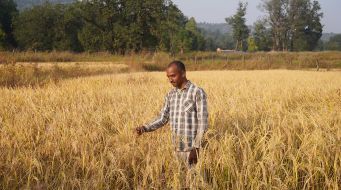
How one irrigation structure gave Ramgarh its first Rabi harvest and local farmer Fulsai Pandu his land back
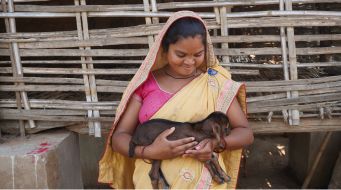
Goat rearing changed Suman Singh’s fortunes with scientific shed design and, WOTR training. Her grit turned struggle into sustainable rural income.
रामगढ़ में एक सिंचाई संरचना ने कैसे पहली बार रबी की फसल दी और किसान फुलसाई पांडू को उसकी ज़मीन वापस लौटाई
A reflection on the sustainability of food and climate programs in the social sector
Ecolinguistics reminds us that language is not neutral; it shapes how we understand and engage with the world.
डायवर्जन आधारित सिंचाई ने रामगढ़ में सालभर पानी, दोहरी खेती, फसल विविधता और किसानों की आय बढ़ाने वाली सामूहिक पहल को संभव बनाया।
A visual journey into how rural Maharashtra is coping with intensifying summer heat and climate change.