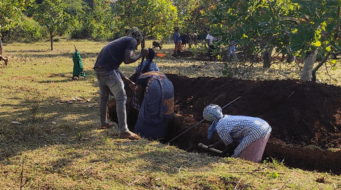
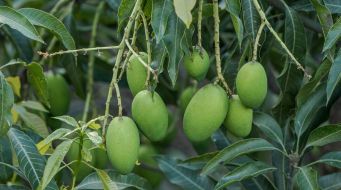
In Rayagada district, crescent bunds help cashew trees retain water on hilly slopes, improving yields. A simple solution strengthening tribal livelihoods and climate resilience.
A Better Tomorrow
Stories, Practices, and Solutions
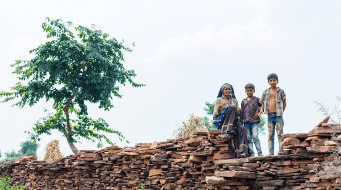
In Karauli district, revived pokhars and pagaras are conserving rainwater and restoring agriculture. These community-led efforts are reducing dependence on hazardous mining while improving livelihoods and health.
Circular economy keeps resources in use for as long as possible, extracts maximum value from them, and then recovers and regenerates products at the end of service life.
In late January, the United States withdrew once again from the Paris Agreement, while the Environmental Protection Agency (EPA) revoked its 2009 Endangerment Finding—moves that highlight how climate policy reversals in major economies can destabilise global efforts and pose serious risks for developing countries, particularly India.
Read how the results of community-led watershed development remain evident even after 25 years in the rain-shadow area of Maharashtra.
Drawing from work with smallholder farmers—from Kumbharwadi in Maharashtra to Madaul in Odisha—WOTR has contributed key experiences, insights, and evidence to the Stories of Resilience 2025, a publication launched by the Global Centre on Adaptation (GCA) at the United Nations Climate Change Conference in Belém, Brazil.
UNEP highlights the growing divide between climate impacts and adaptation finance.
The project focuses on improving irrigation facilities and promoting alternate livelihood opportunities, enhancing income stability and building climate resilience in the region.
At this year’s IUCN World Conservation Congress in Abu Dhabi, a new global report was released that carries an important message for our planet: to restore the land, we must first reconnect it.
With support from Bread for the World, WOTR is helping the community in Odisha chart its own path to development.
In Rayagada district, crescent bunds help cashew trees retain water on hilly slopes, improving yields. A simple solution strengthening tribal livelihoods and climate resilience.
In Karauli district, revived pokhars and pagaras are conserving rainwater and restoring agriculture. These community-led efforts are reducing dependence on hazardous mining while improving livelihoods and health.
Circular economy keeps resources in use for as long as possible, extracts maximum value from them, and then recovers and regenerates products at the end of service life.
In late January, the United States withdrew once again from the Paris Agreement, while the Environmental Protection Agency (EPA) revoked its 2009 Endangerment Finding—moves that highlight how climate policy reversals in major economies can destabilise global efforts and pose serious risks for developing countries, particularly India.
Read how the results of community-led watershed development remain evident even after 25 years in the rain-shadow area of Maharashtra.
Drawing from work with smallholder farmers—from Kumbharwadi in Maharashtra to Madaul in Odisha—WOTR has contributed key experiences, insights, and evidence to the Stories of Resilience 2025, a publication launched by the Global Centre on Adaptation (GCA) at the United Nations Climate Change Conference in Belém, Brazil.
UNEP highlights the growing divide between climate impacts and adaptation finance.
The project focuses on improving irrigation facilities and promoting alternate livelihood opportunities, enhancing income stability and building climate resilience in the region.
At this year’s IUCN World Conservation Congress in Abu Dhabi, a new global report was released that carries an important message for our planet: to restore the land, we must first reconnect it.
With support from Bread for the World, WOTR is helping the community in Odisha chart its own path to development.
By Categories
By Tags
Mangroves do far more than store carbon. They’re coastal shields, fish nurseries, biodiversity havens, and living systems tied to millions of lives.
How climate change affects women farmers in India, and the solutions they are building for a more resilient future.
Observed every year on 16 July, World Snake Day aims to dispel myths and raise awareness about one of the most misunderstood creatures on Earth.
This film tells the story of what changed when over 11,800 farmers came together to build their own Farmer Producer Companies
A tree planted is not a tree grown. The 6R approach helps turn plantation drives into lasting forests.
वैज्ञानिक बकरीशेड और WOTR के प्रशिक्षण ने सुमन सिंह की जिंदगी बदल दी। उनके दृढ़ संकल्प ने संघर्ष को आजीविका के एक टिकाऊ ग्रामीण स्रोत में बदल दिया।
How one irrigation structure gave Ramgarh its first Rabi harvest and local farmer Fulsai Pandu his land back