In Govindpur, Chhattisgarh, a Custom Hiring Centre is making access to costly farm machinery easier for small and marginal farmers by making these machines available within villages on a rental basis
A Better Tomorrow
Stories, Practices, and Solutions
The gap between reported data and ground realities is often vast in the rural development sector. Sujata Tripathy writes why real-time data is important which highlights not just the numbers but also the qualitative aspects of development.
A water storage capacity of 2.5 million litres was created, bringing 64.25 acres of barren land back under cultivation while reducing soil erosion and improving groundwater recharge.
Most conversations on agriculture focus on climate change, erratic rainfall, and the impact these have on crops. But we often overlook the very base of farming — the soil.
Drawing from work with smallholder farmers—from Kumbharwadi in Maharashtra to Madaul in Odisha—WOTR has contributed key experiences, insights, and evidence to the Stories of Resilience 2025, a publication launched by the Global Centre on Adaptation (GCA) at the United Nations Climate Change Conference in Belém, Brazil.
How can smallholders farm fish while safeguarding their local ecosystems? One promising answer lies in farm ponds.
The idea that pollution increases early in development but later decreases as countries get richer and adopt cleaner technologies—as suggested by the Environmental Kuznets Curve—doesn’t hold in reality, where the damage is often lasting and hard to reverse.
As Earth Day 2025 prompts global reflection on sustainability, biodiversity, and climate action, it is an opportunity to examine the intersections between environmental conservation and development in India.
Watershed Organisation Trust along with its esteemed partners is implementing solar-powered solutions to ensure drinking water supply, irrigate farmlands and light the streets in rural areas of Chhattisgarh.
Imagine a barren patch of land, lifeless, without hope, dismissed as worthless. Now imagine transforming not one, not two, but 90 such spaces into green, thriving hubs of life, prosperity, and sustainability. This is not a distant dream; it’s a mission. A mission to fuse the power of nature, technology, and human will
In Govindpur, Chhattisgarh, a Custom Hiring Centre is making access to costly farm machinery easier for small and marginal farmers by making these machines available within villages on a rental basis
The gap between reported data and ground realities is often vast in the rural development sector. Sujata Tripathy writes why real-time data is important which highlights not just the numbers but also the qualitative aspects of development.
A water storage capacity of 2.5 million litres was created, bringing 64.25 acres of barren land back under cultivation while reducing soil erosion and improving groundwater recharge.
Most conversations on agriculture focus on climate change, erratic rainfall, and the impact these have on crops. But we often overlook the very base of farming — the soil.
Drawing from work with smallholder farmers—from Kumbharwadi in Maharashtra to Madaul in Odisha—WOTR has contributed key experiences, insights, and evidence to the Stories of Resilience 2025, a publication launched by the Global Centre on Adaptation (GCA) at the United Nations Climate Change Conference in Belém, Brazil.
How can smallholders farm fish while safeguarding their local ecosystems? One promising answer lies in farm ponds.
The idea that pollution increases early in development but later decreases as countries get richer and adopt cleaner technologies—as suggested by the Environmental Kuznets Curve—doesn’t hold in reality, where the damage is often lasting and hard to reverse.
As Earth Day 2025 prompts global reflection on sustainability, biodiversity, and climate action, it is an opportunity to examine the intersections between environmental conservation and development in India.
Watershed Organisation Trust along with its esteemed partners is implementing solar-powered solutions to ensure drinking water supply, irrigate farmlands and light the streets in rural areas of Chhattisgarh.
Imagine a barren patch of land, lifeless, without hope, dismissed as worthless. Now imagine transforming not one, not two, but 90 such spaces into green, thriving hubs of life, prosperity, and sustainability. This is not a distant dream; it’s a mission. A mission to fuse the power of nature, technology, and human will
By Categories
By Tags
How planning and implementation of ecosystem-based adaptation (EbA) and agroecology principles in arid or semi-arid regions can help address the growing impacts of climate change.
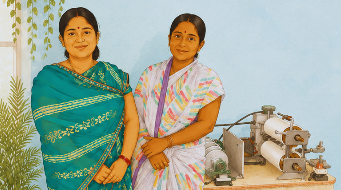
Two mothers in drought-hit Marathwada built a papad enterprise with WOTR and Standard Chartered Bank, paying school fees for their children.
COP17 put a simple question to the world’s drought experts: can lost land be restored? WOTR’s watersheds may hold the answer.
Mango orchards are improving rural livelihoods in Chhattisgarh, creating resilient farms, diverse incomes, and long-term opportunities for farming communities.
Drawing on WOTR’s grassroots experience, this piece explores the powerful connection between water security, ecosystem restoration, agriculture and nutrition security in rural India.
Exploring World Water Week through our interventions in implementing ecohydrology-based Nature-based Solutions in Maharashtra and Telangana
This World Water Week, explore how water access shapes pastoral livelihoods, migration routes and resilience across India’s changing landscapes.