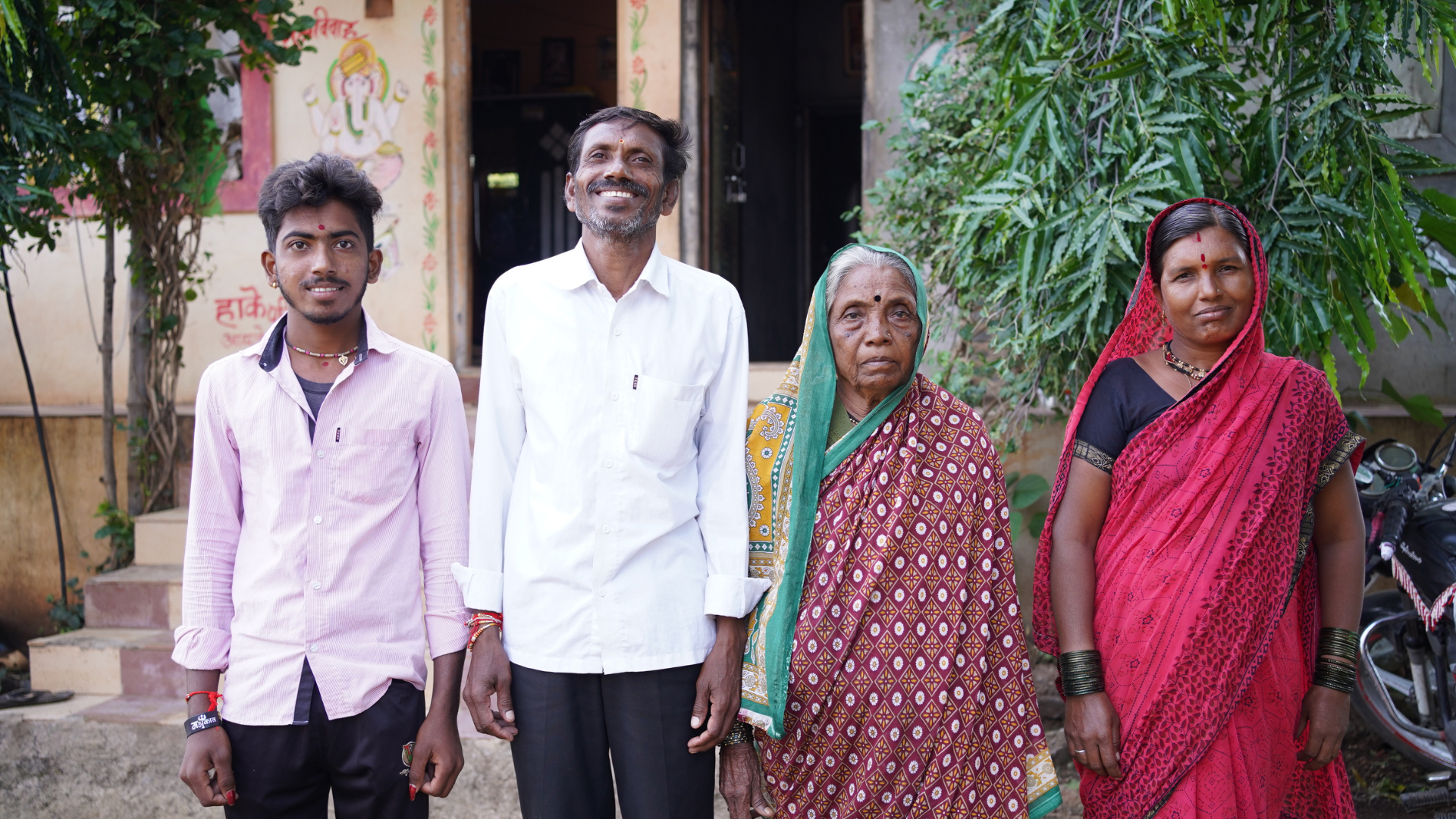
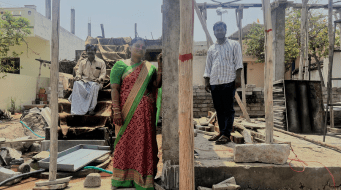
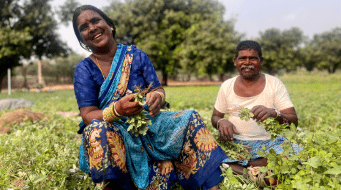
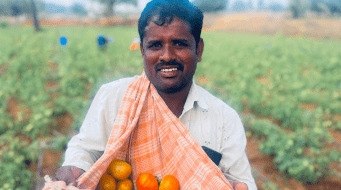
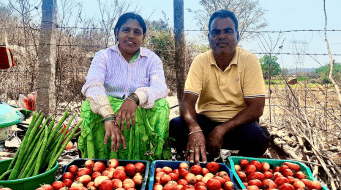
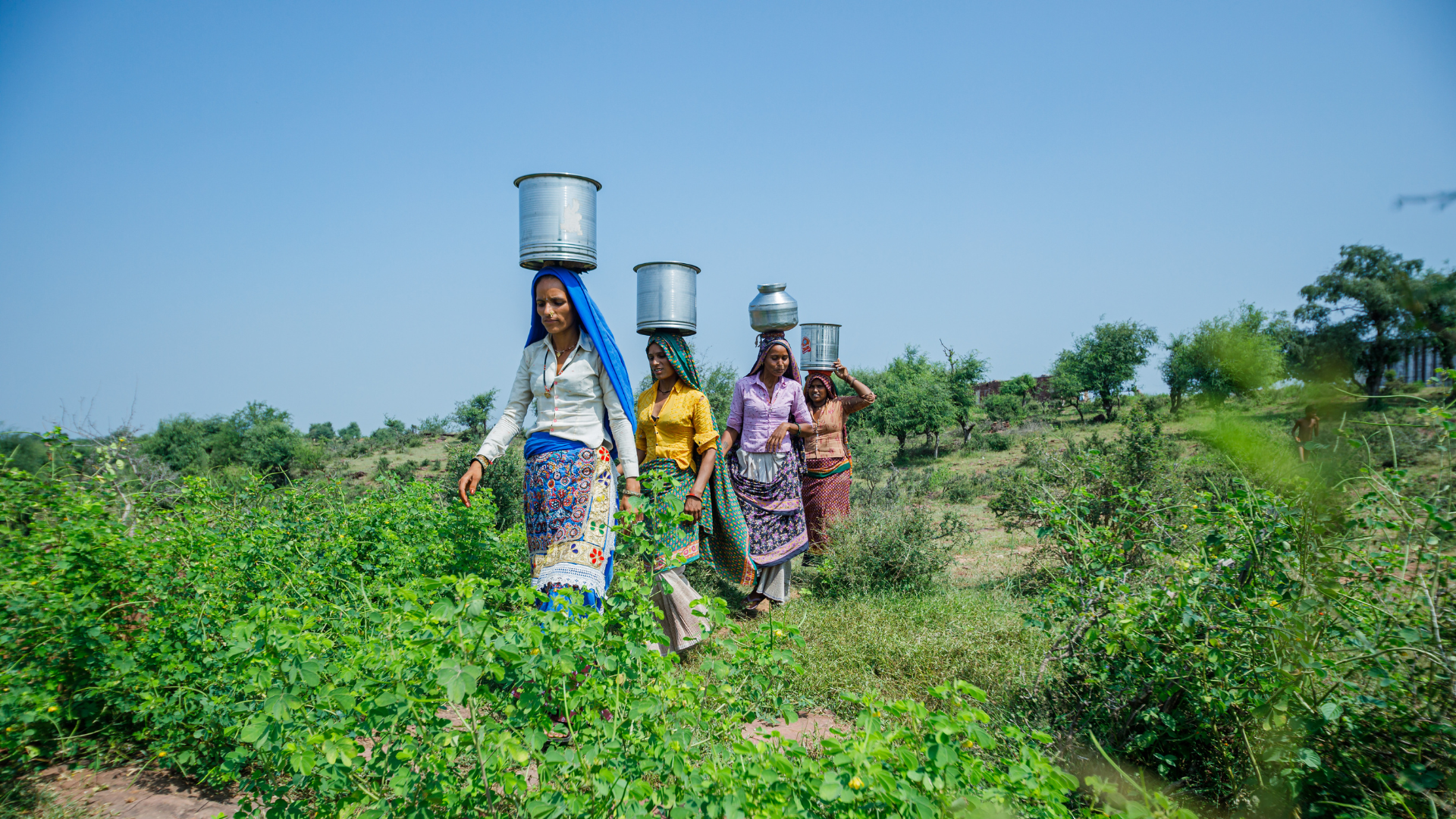
Beneath climate change’s disproportionate burden on rural women lies a story of strength, collaboration, and empowerment. On this International Day of Rural Women, let’s shift the narrative and applaud incredible tales of resilience like those we discovered in WOTR’s project villages in Ahmednagar
A Better Tomorrow
Stories, Practices, and Solutions
Every October 13th marks a pivotal moment of unity across the globe: The United Nations International Day for Natural Disaster Reduction. WOTR remains committed to transforming rural lives through sustainable water and climate-resilient practices, using EbA
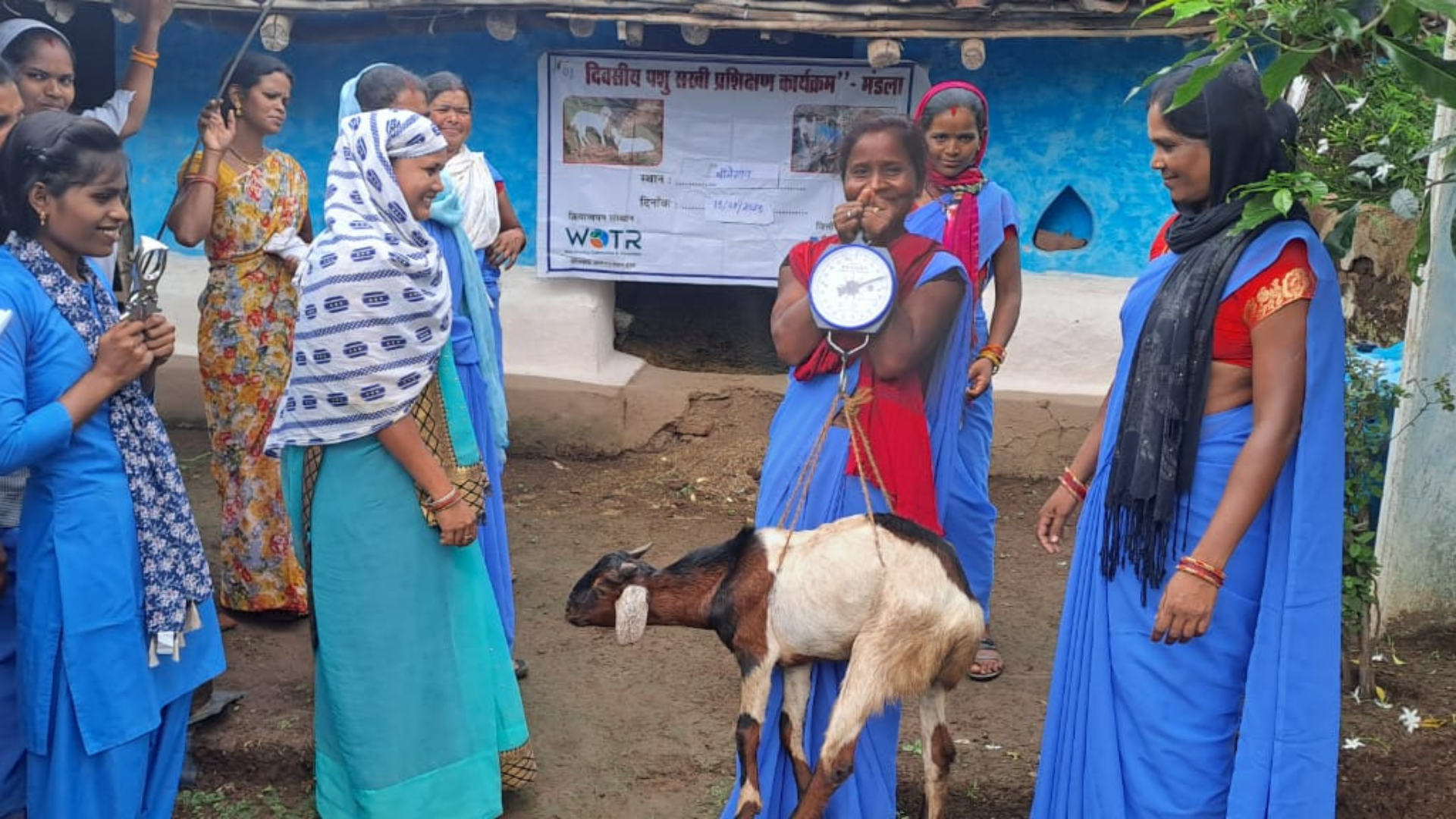
In this context, the ‘Pashu Sakhis’ programme trains local women to become Community Animal Care Service Providers (CASP). These Pashu Sakhis offer essential livestock care and guidance, empowering rural women and improving animal health.
In a momentous celebration that brought together communities, stakeholders, and visionaries, the ‘Climate Change Adaptation in Jafrabad’ project, a collaborative initiative between HDFC Bank Parivartan and WOTR marked its successful
This story from Sara in Baikunthpur block of Koriya district in Chhattisgarh, showcases how the collective determination of numerous stakeholders brought to life the dream of having a top-notch school in the village.
If you’re able to fill your bottle with clean drinking water at any given time of the day, clearly you are not amongst the 163 million Indians with no access to this privilege. India is one of the most water-stressed countries in the world
Plankton, specifically cyanobacteria (a type of phytoplankton), are the pioneers of photosynthesis on Earth. Yet, when we think of aquatic life, our minds often jump to fish, birds, crabs, and plants. Rarely do we give a thought to plankton, the
Deficit irrigation is the way towards sustainable agriculture in India, particularly in regions with uncertain and uneven rainfall patterns. There are several challenges posed by climate change, urbanisation, and industrialisation on agricultural
India experiences diverse rainfall patterns due to its agro-climatic and ecological variations. Maharashtra, in particular, faces challenges related to erratic and insufficient rainfall, leading to vulnerability in agriculture. The onset of the
Tracing the historical evolution of global warming awareness from its origins in the late 1930s to its current status, it is a pressing global concern due to human activities like burning fossil fuels. The
Beneath climate change’s disproportionate burden on rural women lies a story of strength, collaboration, and empowerment. On this International Day of Rural Women, let’s shift the narrative and applaud incredible tales of resilience like those we discovered in WOTR’s project villages in Ahmednagar
Every October 13th marks a pivotal moment of unity across the globe: The United Nations International Day for Natural Disaster Reduction. WOTR remains committed to transforming rural lives through sustainable water and climate-resilient practices, using EbA
In this context, the ‘Pashu Sakhis’ programme trains local women to become Community Animal Care Service Providers (CASP). These Pashu Sakhis offer essential livestock care and guidance, empowering rural women and improving animal health.
In a momentous celebration that brought together communities, stakeholders, and visionaries, the ‘Climate Change Adaptation in Jafrabad’ project, a collaborative initiative between HDFC Bank Parivartan and WOTR marked its successful
This story from Sara in Baikunthpur block of Koriya district in Chhattisgarh, showcases how the collective determination of numerous stakeholders brought to life the dream of having a top-notch school in the village.
If you’re able to fill your bottle with clean drinking water at any given time of the day, clearly you are not amongst the 163 million Indians with no access to this privilege. India is one of the most water-stressed countries in the world
Plankton, specifically cyanobacteria (a type of phytoplankton), are the pioneers of photosynthesis on Earth. Yet, when we think of aquatic life, our minds often jump to fish, birds, crabs, and plants. Rarely do we give a thought to plankton, the
Deficit irrigation is the way towards sustainable agriculture in India, particularly in regions with uncertain and uneven rainfall patterns. There are several challenges posed by climate change, urbanisation, and industrialisation on agricultural
India experiences diverse rainfall patterns due to its agro-climatic and ecological variations. Maharashtra, in particular, faces challenges related to erratic and insufficient rainfall, leading to vulnerability in agriculture. The onset of the
Tracing the historical evolution of global warming awareness from its origins in the late 1930s to its current status, it is a pressing global concern due to human activities like burning fossil fuels. The
By Categories
By Tags
Odisha’s tribal communities face economic and livelihood challenges due to persistent water shortages and limited opportunities. This blog explores how cashew cultivation, supported by various government initiatives and NGOs, is transforming these communities. Historical struggles over land rights and recent developments in cashew farming are highlighted, showcasing both the challenges and the potential for sustainable agricultural practices.
On the occasion of World Environment Day, this blog underscores the pressing necessity for present and upcoming generations to address land degradation and desertification. With 40% of the world’s land degraded and impacting half of the global population, prompt action is imperative.
Despite initial skepticism from men in their village, three women from Yellammathada started a successful paper plate-making business. Through a training program by HSBC, they launched their venture with a loan and received equipment and training. The business has allowed them to repay their loan, earn profits, and gain financial independence.
Lambadi women in Telangana have revitalised the traditional craft of Maggam embroidery, enabling them to earn a stable income from home. This change, initiated by a training program from WOTR, has allowed them to avoid migration for labor work and support their families better. Women now earn Rs 5,000-10,000 through their embroidery, which also preserves their cultural heritage.
Three years ago, Maheshwaram Panduranga and his wife Manga faced a severe water crisis on their 3-acre farm in Loyapally, Telangana. With help from WOTR and HSBC, they constructed a farm pond, significantly improving water levels. They then ventured into fish farming, earning substantial profits and transforming their financial situation. The couple now enjoys a better lifestyle and serves as an inspiration for others in their village.
Polamoney Buchaya, 63, and his wife Bugamma, 54, transitioned to farming after Buchaya’s heart attack in 2020, cultivating green leafy vegetables on leased land. Supported by WOTR and HSBC, they adopted rainpipe irrigation, enhancing water efficiency and crop yield. This shift increased their earnings significantly, providing a steady income. Their success has inspired other farmers in their village to adopt similar practices.
Godugu Krishna, a farmer in Telangana, transformed his 2.5-acre farm from debt-ridden to profitable through innovative water management and organic farming, supported by WOTR and HSBC. Initially reliant on rain-fed farming and struggling with high costs, Krishna adopted drip irrigation and diversified crops. This shift increased his yields and profits, allowing him to repay debts, expand into dairy production, and achieve financial stability. His success has turned skepticism into respect within his community.
When Kumpally Paapi Reddy and his wife K Venkata Laxmi started farming on rocky wasteland in Gaddamallaiahguda, Telangana, they were met with skepticism. Despite the challenges, they transformed the land through sheer determination and innovative practices. Partnering with WOTR and HSBC in 2020, they implemented water management strategies and shifted to organic farming.