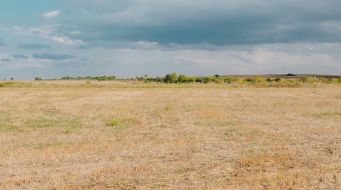
Imagine a barren patch of land, lifeless, without hope, dismissed as worthless. Now imagine transforming not one, not two, but 90 such spaces into green, thriving hubs of life, prosperity, and sustainability. This is not a distant dream; it’s a mission. A mission to fuse the power of nature, technology, and human will
A Better Tomorrow
Stories, Practices, and Solutions
The complexity of the challenges faced by semi-arid farming systems in India necessitates a holistic understanding of climate resilience, one that integrates both climate and development concerns.
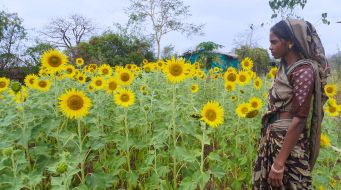
Kusava Goswami, her mother-in-law Dhapubai, and Ambalal Gameti – a Wasundhara Sewak recognised the urgency to transition their community towards organic agriculture.
India is also home to a multitude of Indigenous Peoples and Local Communities (IPLCs), each with unique ethical, cultural, and traditional practices. For centuries, these communities have harnessed their Traditional Ecological Knowledge (TEK) to sustain their livelihoods and preserve their cultural identities.
The crescent bund is one of the most effective in-situ soil and water moisture conservation methods used in cashew plantations
This blog post is based on a unique multilayer farming initiative implemented as part of the “Integrated Water Resources Development and Promotion of Ecosystem-based Adaptation (EbA) in Maharashtra and Telangana—A Practice and Knowledge Embedded Approach” project, which is supported by the Honeywell Hometown Solutions India Foundation (HHSIF).
As climate change tightens its grip, the resilient communities in Chhattisgarh need your support more than ever
WOTR recently celebrated 30 years of transformative rural development at its “Ripples of Change” event. It spotlighted WOTR’s impact in rejuvenating rural landscapes and empowering communities.
As Axis Bank Foundation strives to improve the livelihoods of two million households by 2026-27, one of the intensifying and worrying hurdles our communities face is the disproportionate impact of climate change. Climate adaptation is, hence, an urgency!
Through WOTR’s watershed project, Beni Prasad Jhariya found his calling. He took on the role of a Wasundhara Sevak, inspiring his community to adopt sustainable farming and water conservation practices.
Imagine a barren patch of land, lifeless, without hope, dismissed as worthless. Now imagine transforming not one, not two, but 90 such spaces into green, thriving hubs of life, prosperity, and sustainability. This is not a distant dream; it’s a mission. A mission to fuse the power of nature, technology, and human will
The complexity of the challenges faced by semi-arid farming systems in India necessitates a holistic understanding of climate resilience, one that integrates both climate and development concerns.
Kusava Goswami, her mother-in-law Dhapubai, and Ambalal Gameti – a Wasundhara Sewak recognised the urgency to transition their community towards organic agriculture.
India is also home to a multitude of Indigenous Peoples and Local Communities (IPLCs), each with unique ethical, cultural, and traditional practices. For centuries, these communities have harnessed their Traditional Ecological Knowledge (TEK) to sustain their livelihoods and preserve their cultural identities.
The crescent bund is one of the most effective in-situ soil and water moisture conservation methods used in cashew plantations
This blog post is based on a unique multilayer farming initiative implemented as part of the “Integrated Water Resources Development and Promotion of Ecosystem-based Adaptation (EbA) in Maharashtra and Telangana—A Practice and Knowledge Embedded Approach” project, which is supported by the Honeywell Hometown Solutions India Foundation (HHSIF).
As climate change tightens its grip, the resilient communities in Chhattisgarh need your support more than ever
WOTR recently celebrated 30 years of transformative rural development at its “Ripples of Change” event. It spotlighted WOTR’s impact in rejuvenating rural landscapes and empowering communities.
As Axis Bank Foundation strives to improve the livelihoods of two million households by 2026-27, one of the intensifying and worrying hurdles our communities face is the disproportionate impact of climate change. Climate adaptation is, hence, an urgency!
Through WOTR’s watershed project, Beni Prasad Jhariya found his calling. He took on the role of a Wasundhara Sevak, inspiring his community to adopt sustainable farming and water conservation practices.
By Categories
By Tags
Economic growth has surged globally, but it continues to overlook the true value of biodiversity, placing disproportionate risks on the Global South.
In Chhattisgarh, solar solutions bring water, irrigation, and light to villages, boosting livelihoods and building resilient, self-reliant communities.
In Rayagada district, crescent bunds help cashew trees retain water on hilly slopes, improving yields. A simple solution strengthening tribal livelihoods and climate resilience.
In Karauli district, revived pokhars and pagaras are conserving rainwater and restoring agriculture. These community-led efforts are reducing dependence on hazardous mining while improving livelihoods and health.
Circular economy keeps resources in use for as long as possible, extracts maximum value from them, and then recovers and regenerates products at the end of service life.
Reimagining FPCs as drivers of climate resilience through ecosystem-based approaches to farming. Highlighting how water conservation, soil health and women’s leadership are strengthening livelihoods.
Mango orchards are transforming farmers’ lives in Chhattisgarh through sustainable incomes, water conservation, and climate resilience.
Organic farming comes alive as Chhattisgarh women turn forest knowledge into natural pesticides, inspiring farmers across villages.